
3D Model · Electrical · Engineering
Three Phase Step-Down Transformer - 3D machine module.
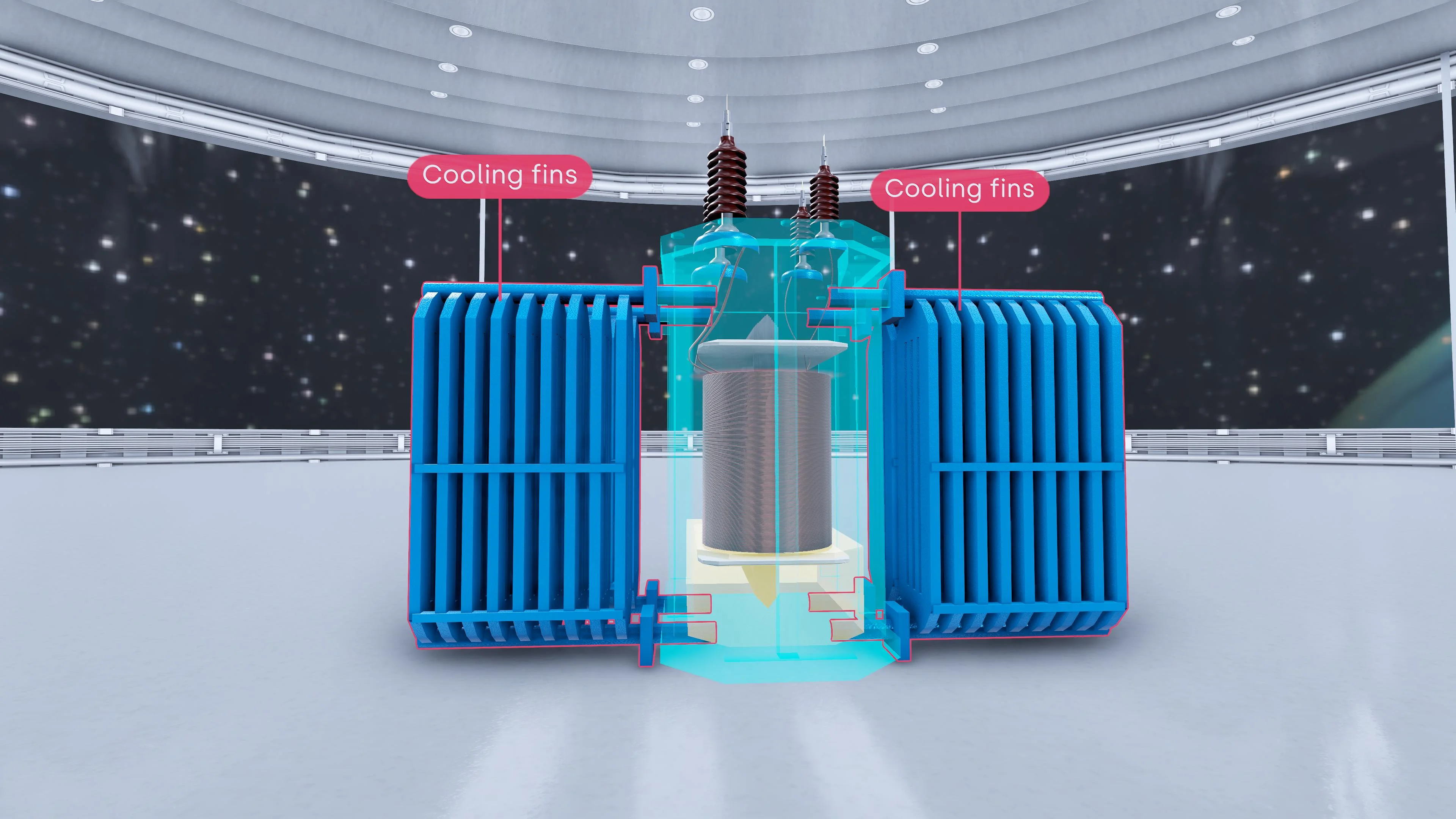
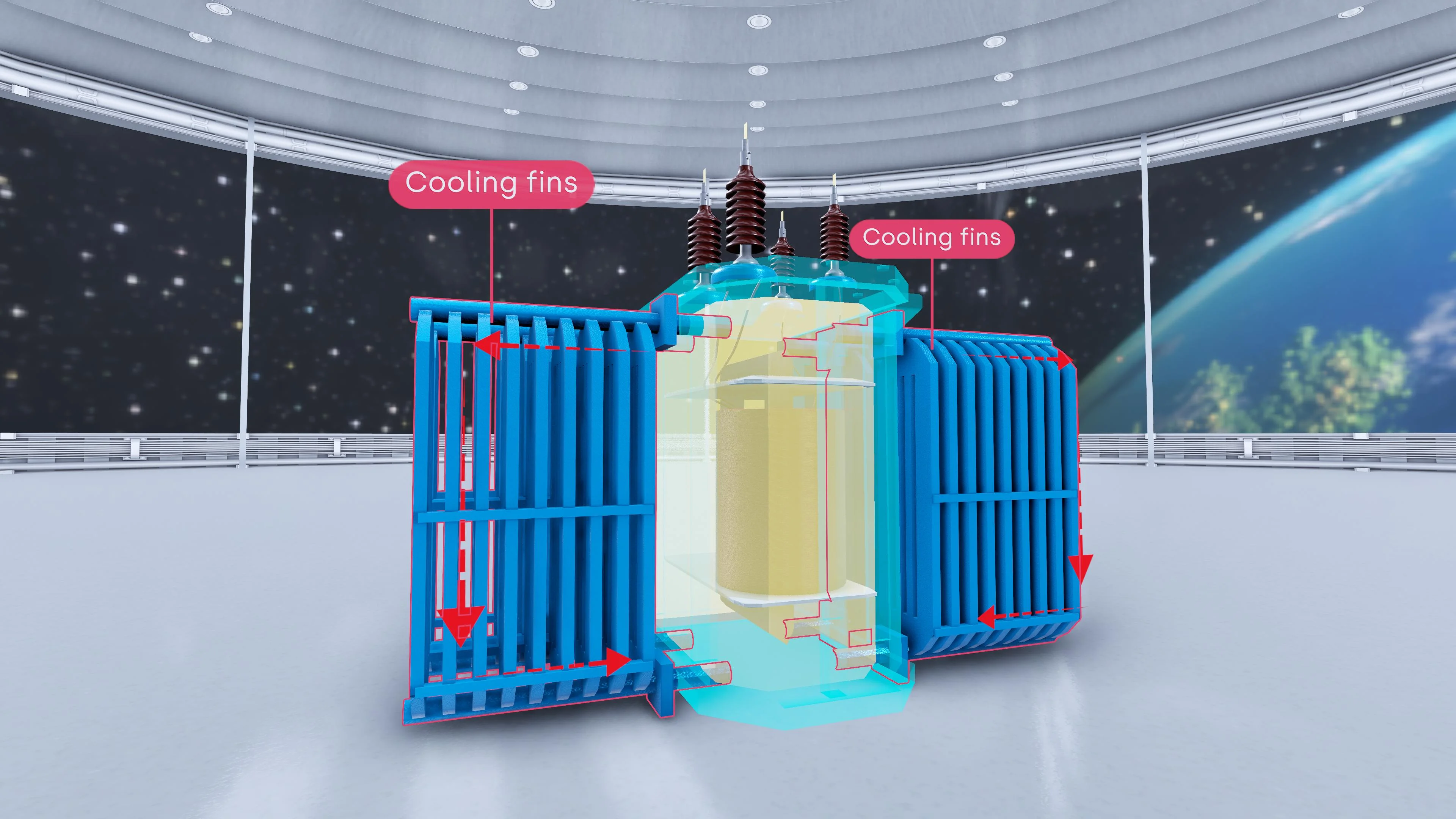
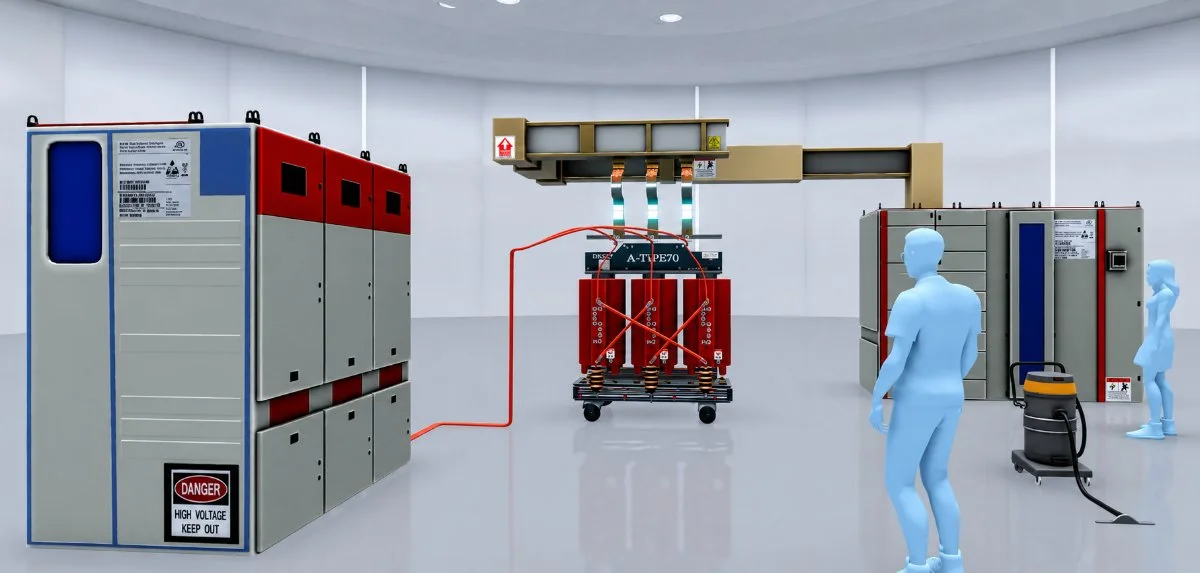
See how a three-phase step-down transformer converts high-voltage AC supply to a lower voltage. Explore the windings, laminated core, bushings, and cooling fins, and follow the magnetic flux and energy transfer step by step.
See it
Inside the module.
Learning objectives
By the end of this module, students will be able to:
Identify the main parts of a three-phase step-down transformer
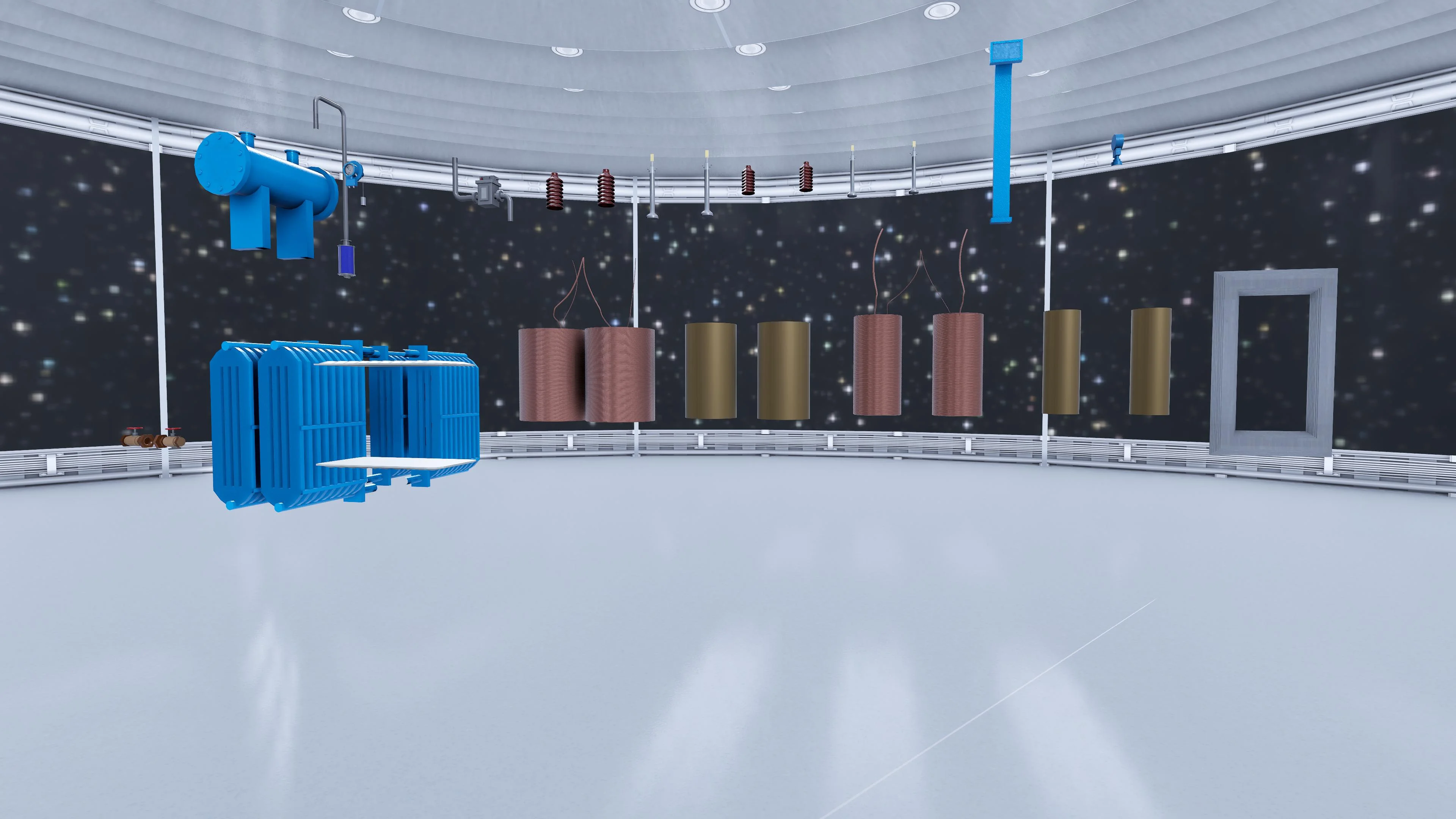
Understand the primary winding, secondary winding, laminated core, terminals, bushings, tank, insulation, and cooling system
Explain how voltage transformation happens through electromagnetic induction
Relate the turns ratio to step-down voltage operation
Understand three-phase connections such as star and delta, where relevant
Visualise the magnetic flux path, energy transfer, losses, heating, and cooling
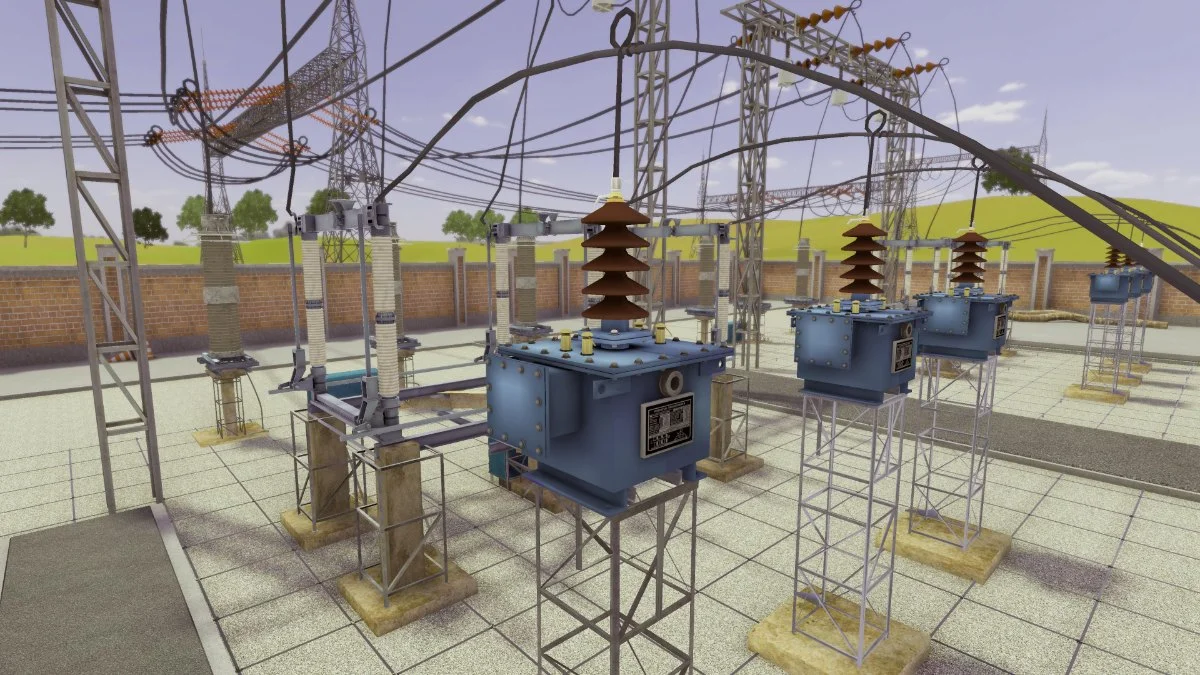
Connect transformer operation with substations, distribution networks, and industrial power systems
About the module
The full machine, part by part and in action.
A three-phase step-down transformer reduces high-voltage three-phase electrical power to a lower voltage suitable for distribution, industrial loads, and end-use systems. It is a key machine in substations, distribution networks, factories, commercial buildings, and utility infrastructure.
In this iXRLabs 3D machine module, students observe the transformer as a complete system and understand the function of each part. The working explanation shows how alternating current in the primary winding produces a changing magnetic flux in the core, which induces voltage in the secondary winding. The module explains voltage reduction using the turns ratio and shows how three-phase power is handled across the winding system.
It also introduces practical engineering concepts - core losses, copper losses, insulation, cooling, terminal connections, bushings, vector groups, load behaviour, voltage regulation, and transformer safety. It works well for machine familiarisation, classroom demonstration, virtual lab support, and power systems learning, with the 7thi AI tutor and built-in assessment throughout.
ABET (United States)
Supports engineering knowledge of electrical machines, electromagnetic systems, power distribution, and transformer operation.
NBA (India)
Supports POs related to engineering knowledge, problem analysis, investigation, and modern tool usage - especially PO5.
University syllabi
Maps to Electrical Machines, Power Systems, Transmission and Distribution, and Substation Equipment course outcomes. Request a custom mapping.
AICTE / NEP 2020
Maps to Electrical Engineering, Electrical Machines, Power Systems, and lab-based learning outcomes; supports experiential and competency-based learning.
Get this module
Included in these iXRLabs packages.
Electrical Engineering
CoreElectrical VR modules - machines, transformers, motors, substations, and power systems.
Complete Engineering
All disciplinesThe full engineering library - 240+ modules across mechanical, civil, and electrical, including the Three Phase Transformer.
Custom rollout
QuotePick specific modules, devices, and seat counts. We'll scope a deployment for your department.
7thi and assessment in this module
7thi in this module
Students can ask 7thi about the turns ratio, flux path, star/delta connections, or any part they see in the model. 7thi answers in context, without breaking the flow.
Assessment
Session data - concepts mastered, time per scene, assessment scores - appears on the faculty dashboard. Export to your LMS via xAPI.
Keep exploring
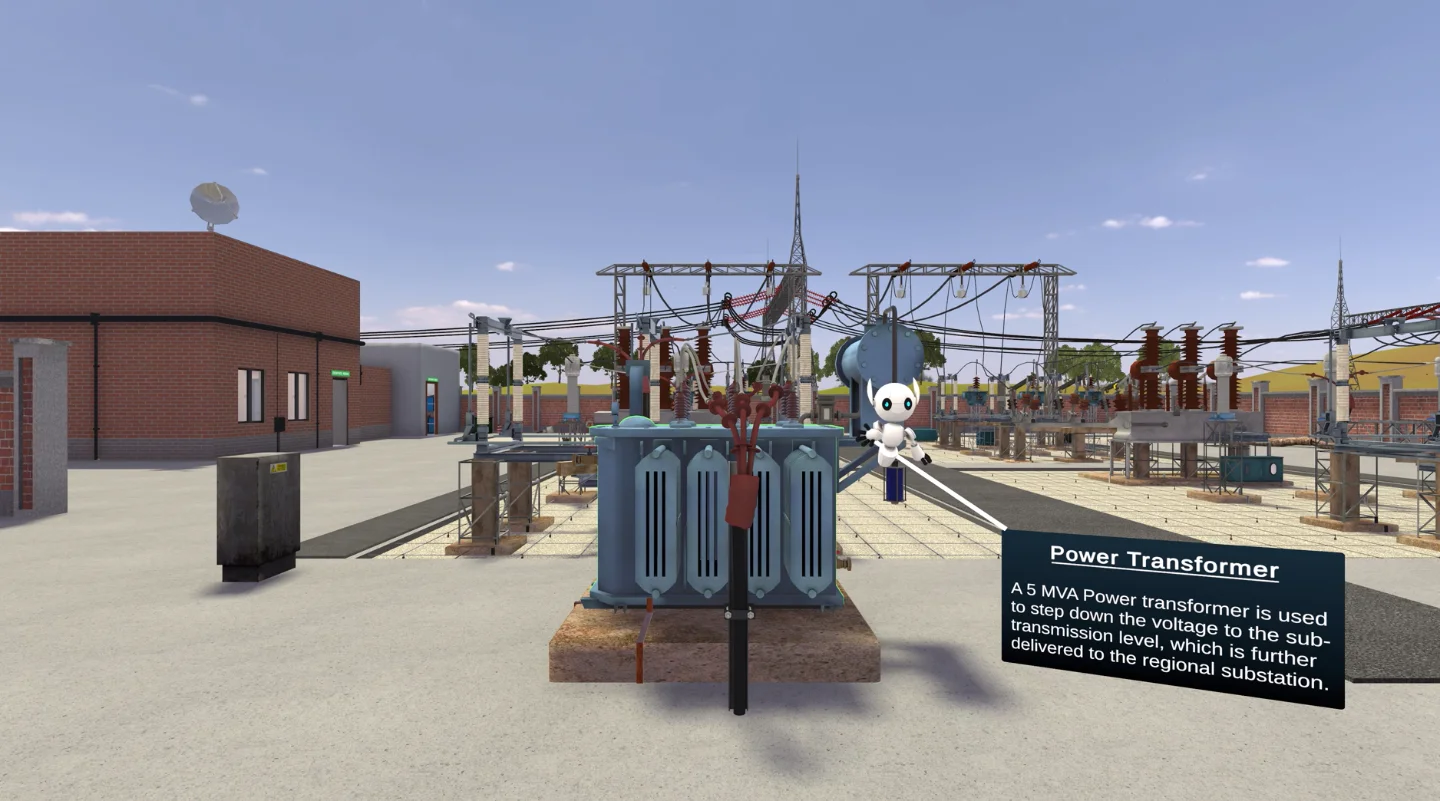
Related electrical modules.
Can students take the transformer apart?
Yes. The model can be explored as a complete machine and as separated components - primary and secondary windings, laminated core, bushings, tank, and cooling fins - so learners see how the parts fit and work together.
Does it explain the working, not just the parts?
Yes. The module walks through applying voltage to the primary winding, the alternating magnetic flux in the core, induction in the secondary, and step-down voltage from the turns ratio.
What prior knowledge do students need?
Basic electrical engineering and AC fundamentals. Suitable for undergraduate Year 2 and above, and for diploma / polytechnic electrical courses.
How long is a typical session?
About 15 minutes for a full run including assessment. Faculty can assign specific scenes or the complete walkthrough.
Which headsets is this module optimised for?
HTC, Meta Quest 2 / 3 / Pro, ClassVR, and any WebXR-compatible browser. It also runs in desktop browsers without a headset.
See the Three Phase Transformer in a demo.
Thirty minutes, the full module, your curriculum questions answered.