
No consumables, no breakage
Run chemistry experiments without chemicals, physics practicals without equipment failures.
VR Labs · Sciences
Virtual reality (VR) experiments in physics, chemistry, botany, and zoology that students can run anytime, repeat infinitely, and learn from - without consumables, breakage, or scheduling constraints. Curriculum-aligned, assessment-ready, AI-guided.
Recognised by Meta · ISO Certified · 10+ years in EdTech
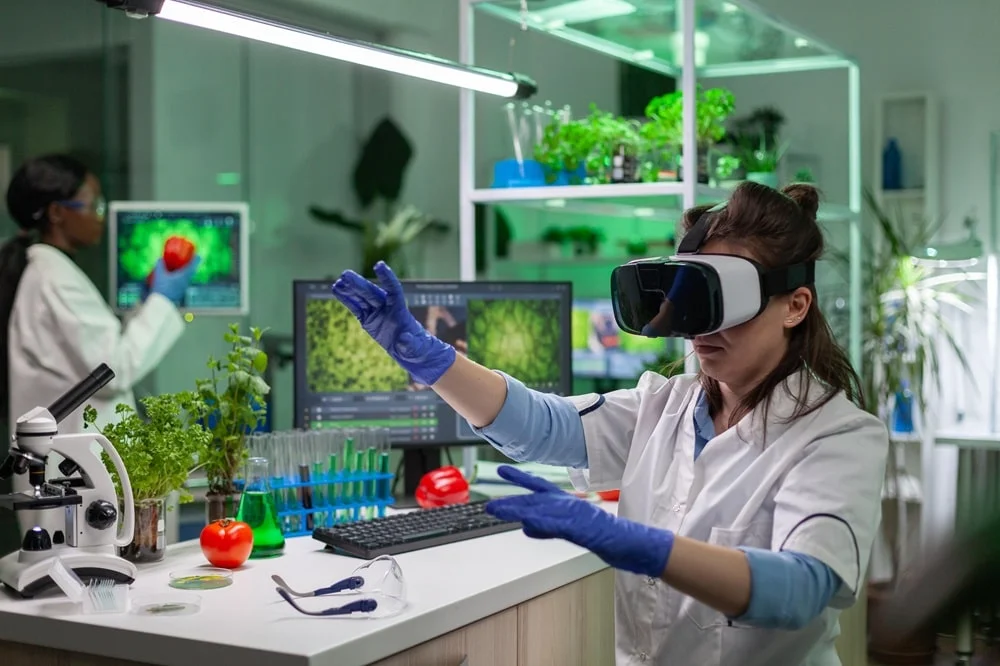
Why VR
Run chemistry experiments without chemicals, physics practicals without equipment failures.
No more three students per apparatus. Every learner runs the full experiment independently.
Students explore what happens when they get it wrong. Errors teach without consequences.
Automatic measurement capture, lab report scaffolding, and faculty analytics.
The science library
Run hands-on experiments across mechanics, optics, electricity, magnetism, waves, and thermodynamics. Students set up the apparatus, change variables, take readings, and watch the result unfold — then repeat the experiment as many times as it takes to understand why it behaves the way it does.
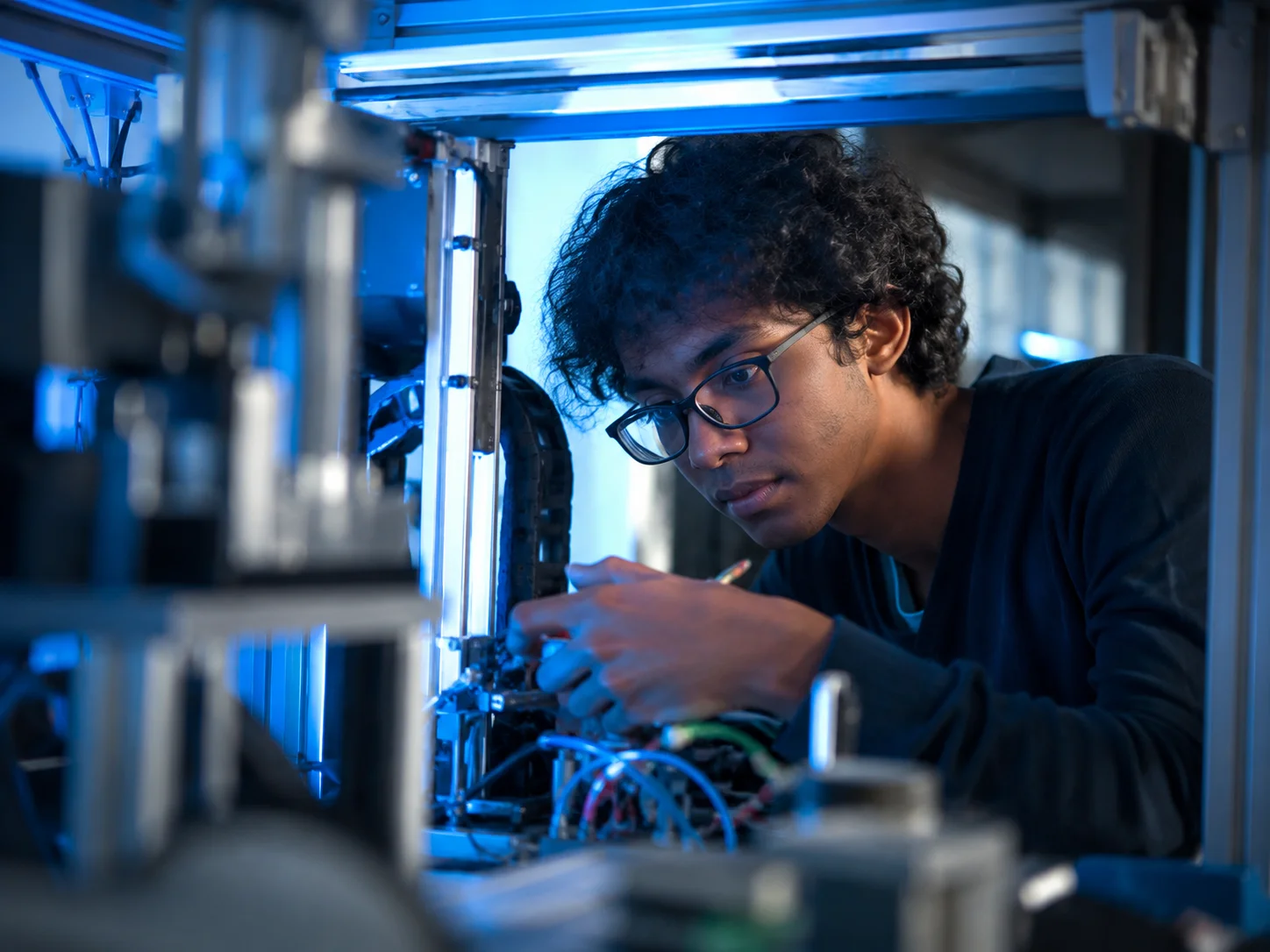
Carry out full chemistry experiments — titrations, organic reactions, spectroscopy, electrolysis, and gas laws. Students measure out reagents, run the reaction, and read the results first-hand, working safely with no consumables used up and nothing to break, so every experiment can be tried again until the technique clicks.
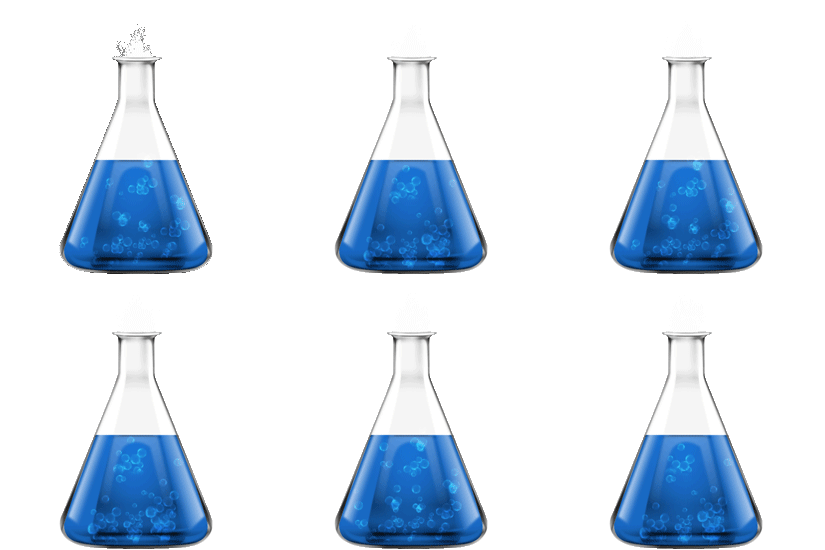
Investigate living systems through guided experiments in plant anatomy, photosynthesis, cell structure, and plant physiology. Students section specimens, run each process step by step, and observe changes that would normally take days — condensing a whole practical into a repeatable session.
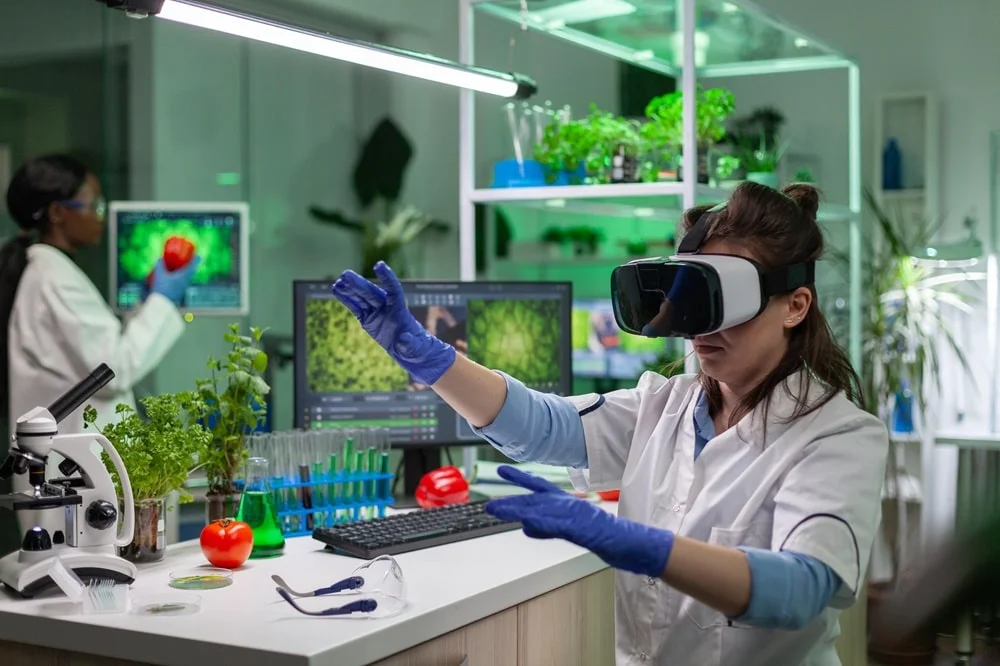
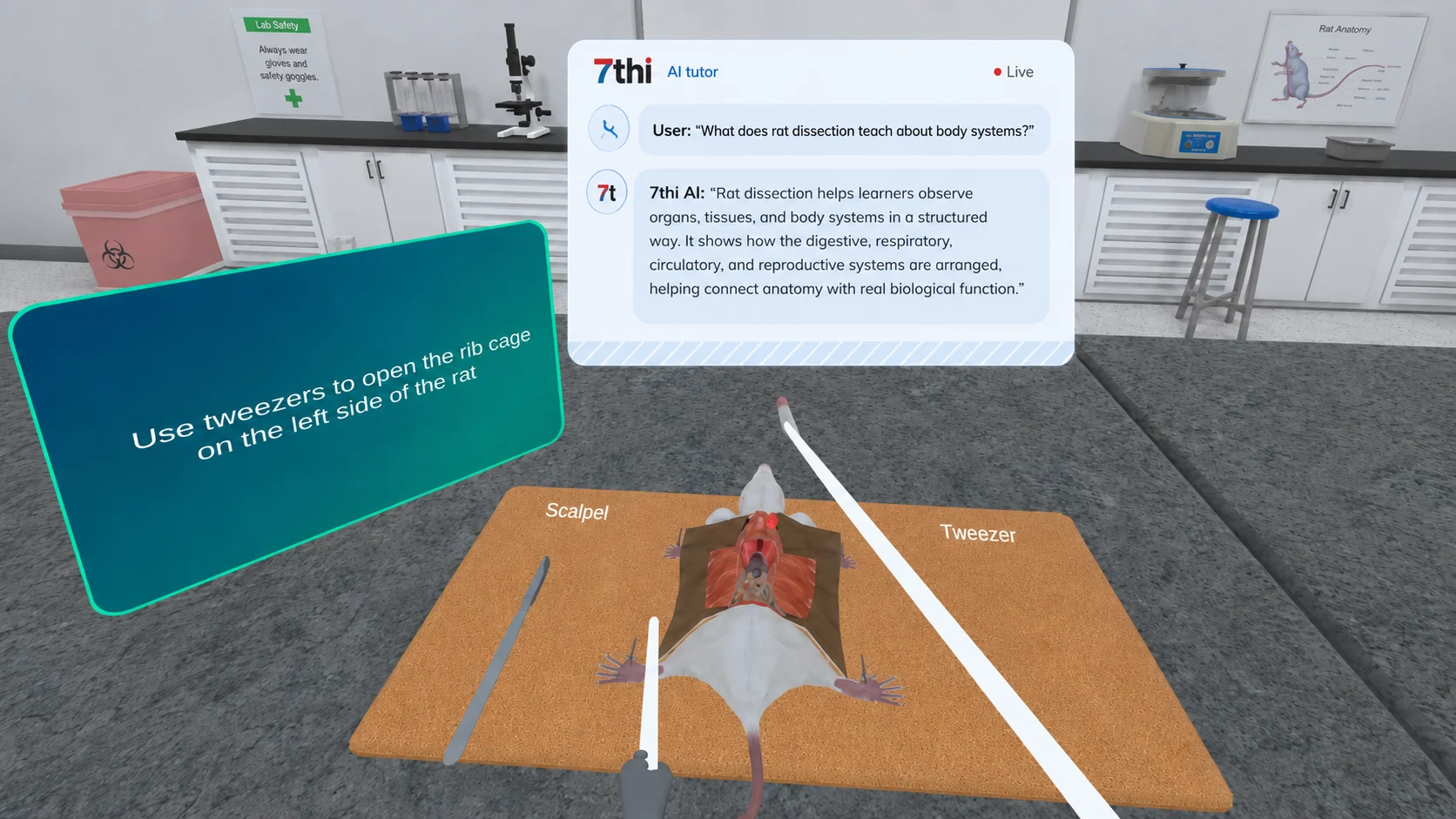
Explore animal anatomy, comparative physiology, and humane dissection alternatives as interactive experiments. Students work through each structure and system at their own pace, repeating procedures as often as needed without specimens, consumables, or ethical concerns.
The library
Meet 7thi
7thi inside science modules prompts hypotheses, checks predictions against results, and adapts to each student's mastery. Faculty configure the depth: foundation practicals or advanced analysis.
Who it's for
BSc, MSc, and integrated science programmes.
Diploma, polytechnic, and applied science practicals.
GCSE and senior secondary science labs.
Standards
Every science module is aligned to recognised curricula. We work with your faculty to verify syllabus alignment before deployment.
Request a syllabus map for your institutionCommon questions
For procurement, IT, and pedagogy questions, our team is one demo away.
Talk to usPhysics, chemistry, botany, and zoology. Modules range from foundational experiments (Ohm's Law, titrations, cell structure) to advanced topics (spectroscopy, plant physiology, comparative anatomy). The library grows quarterly.
For some experiments, yes - especially where consumables are expensive, equipment is limited, or the experiment is hazardous. For others, VR is best used as pre-lab preparation so students arrive at the physical lab already competent.
Yes. Modules map to NAAC, NBA, QS, QAA, and university-specific syllabi. We verify alignment with your faculty before deployment.
Each module includes embedded assessment - measurement accuracy, procedure adherence, and concept questions. Results appear on the faculty analytics dashboard, exportable to your LMS.
No. Every module runs in any modern browser without a headset. Headsets enhance the immersive experience but aren't required to start.
In practice
IIT Delhi
Browser-based VR modules rolled out across programmes and integrated with the campus LMS - no headsets required.
Read the case studyAcross our partners
See how institutions worldwide are putting iXRLabs VR labs to work.
Read the case studyExplore other disciplines
Tailored to your science curriculum, your cohort, and your lab constraints.