
VR Industrial Tour · Electrical · Engineering
Electrical Substation - VR industrial tour.
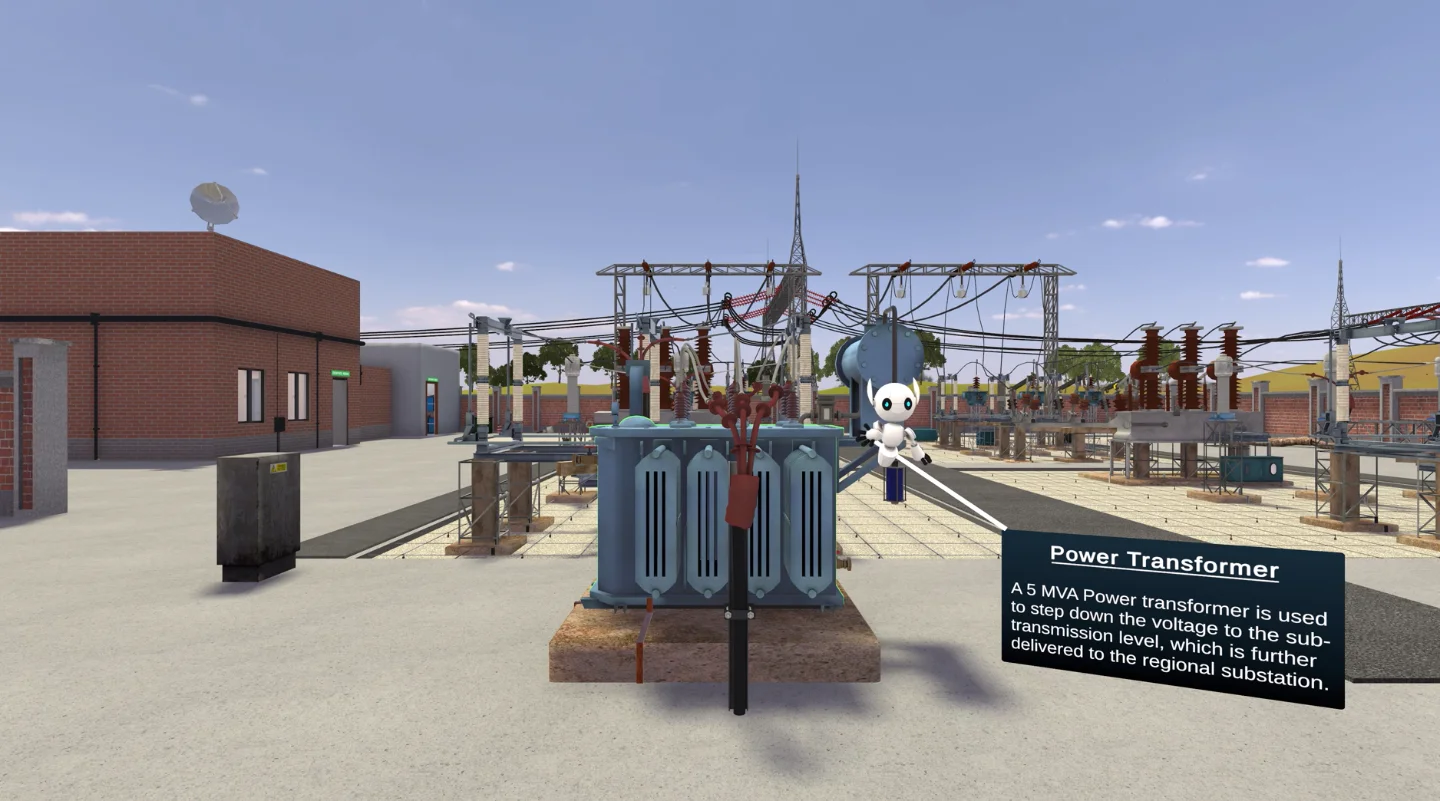
Walk through a live-scale electrical substation in VR - observe power transformers, switchgear, busbars, CTs and PTs, relay panels, and the earthing grid, and follow power from incoming lines to outgoing feeders. Guided and Self-Explore modes.
See it
Inside the module.
Learning objectives
By the end of this module, students will be able to:
Understand the role of a substation in power transmission and distribution
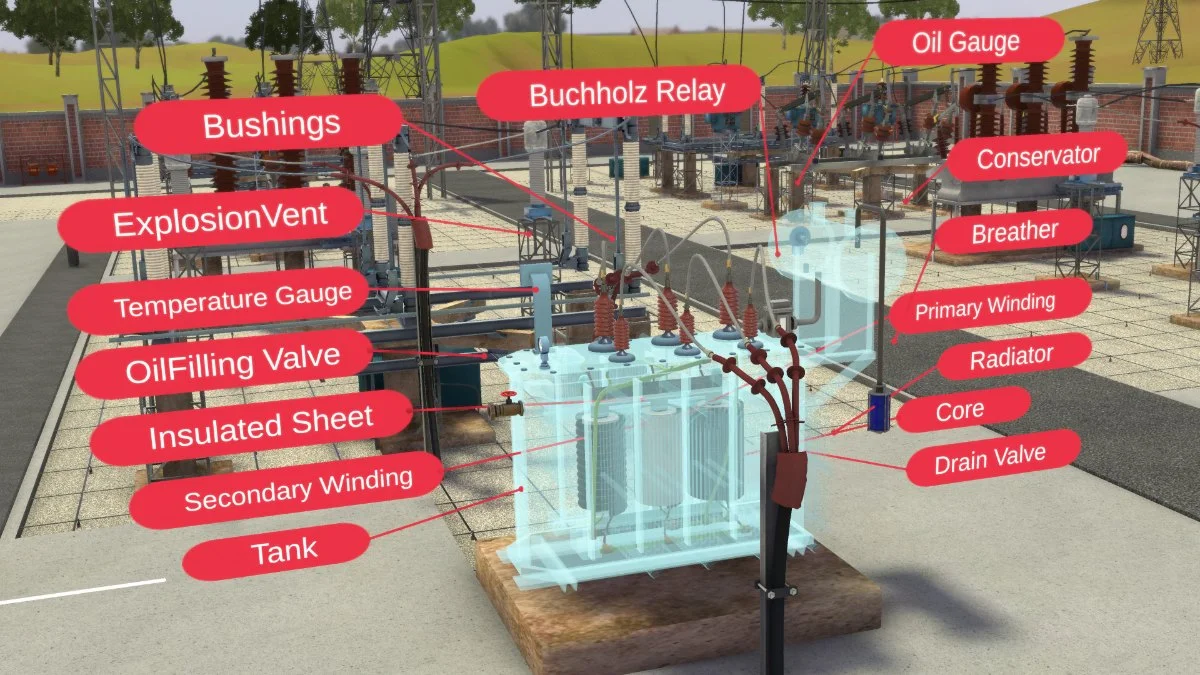
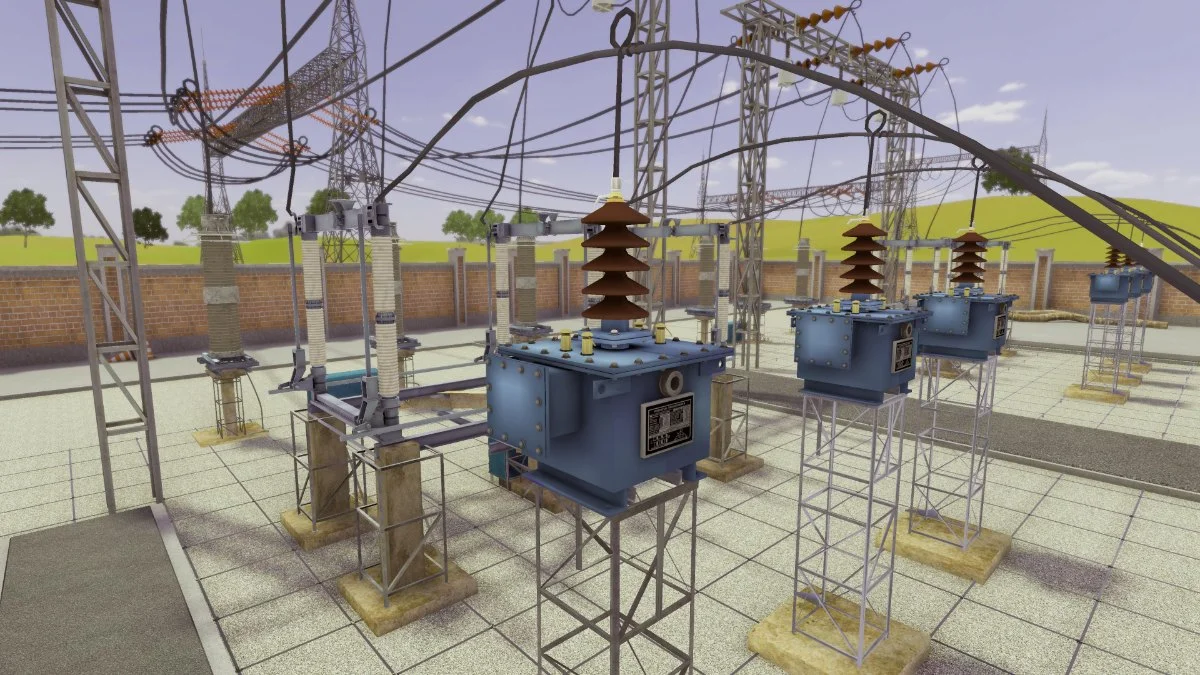
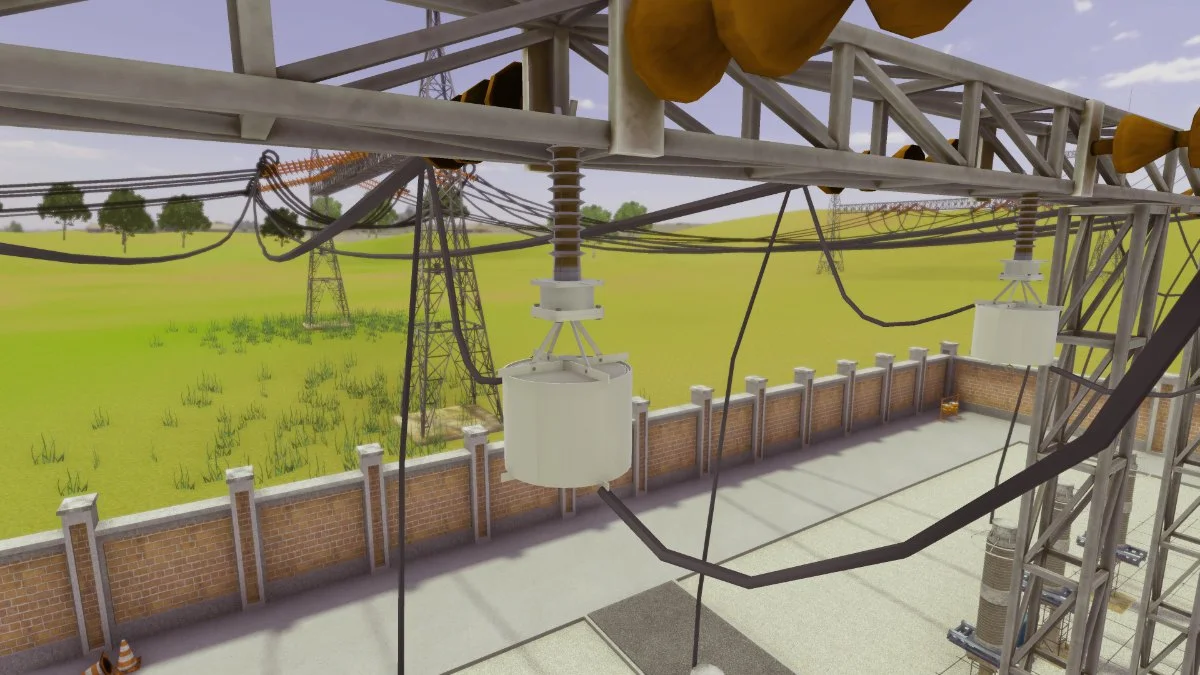
Identify major equipment - transformers, breakers, isolators, CTs, PTs, busbars, relays, and surge arresters
Understand how voltage is stepped up or down for efficient power transfer
Visualise the flow of power from incoming lines to outgoing feeders
Understand protection, switching, metering, isolation, and earthing systems
Relate substation equipment to real grid operation, reliability, and electrical safety
About the module
A substation you can walk through, safely.
An electrical substation receives power from generating stations or transmission lines, transforms voltage levels, enables switching and protection, and distributes power to outgoing feeders. It is essential for grid stability, fault isolation, voltage regulation, and reliable supply - and almost impossible to explore safely in real life.
This module is a structured virtual industrial visit, not a simulation experiment. In Guided Tour Mode, learners are taken through the substation section by section with explanations of each major system. In Self-Explore Mode, they move at their own pace through the switchyard, transformer area, control room, protection panels, busbar arrangement, and feeder bays.
The tour explains power transformers, circuit breakers, isolators, busbars, CTs and PTs, lightning arresters, relay panels, the earthing grid, and incoming and outgoing feeders, alongside concepts such as switching operation, fault protection, insulation coordination, metering, grounding, and substation safety zones - bridging classroom theory and real infrastructure.
ABET (United States)
Supports Student Outcome 1 through engineering knowledge of power systems, transmission, distribution, and protection equipment, and Student Outcome 7 through applied learning via immersive industrial exposure.
NBA (India)
Maps to Course Outcomes in Power Systems, Protection and Switchgear, and High Voltage Engineering, supporting POs around engineering knowledge, investigation, safety, and modern tool usage (notably PO5).
University syllabi
Maps to unit topics, industrial-visit requirements, lab demonstrations, course outcomes, and assessment rubrics. Request a custom mapping.
AICTE / NEP 2020
Aligns with Electrical Engineering, Power Systems, and Protection and Switchgear outcomes, supporting experiential, visualization-led, and industry-connected learning.
Get this module
Included in these iXRLabs packages.
Electrical Engineering
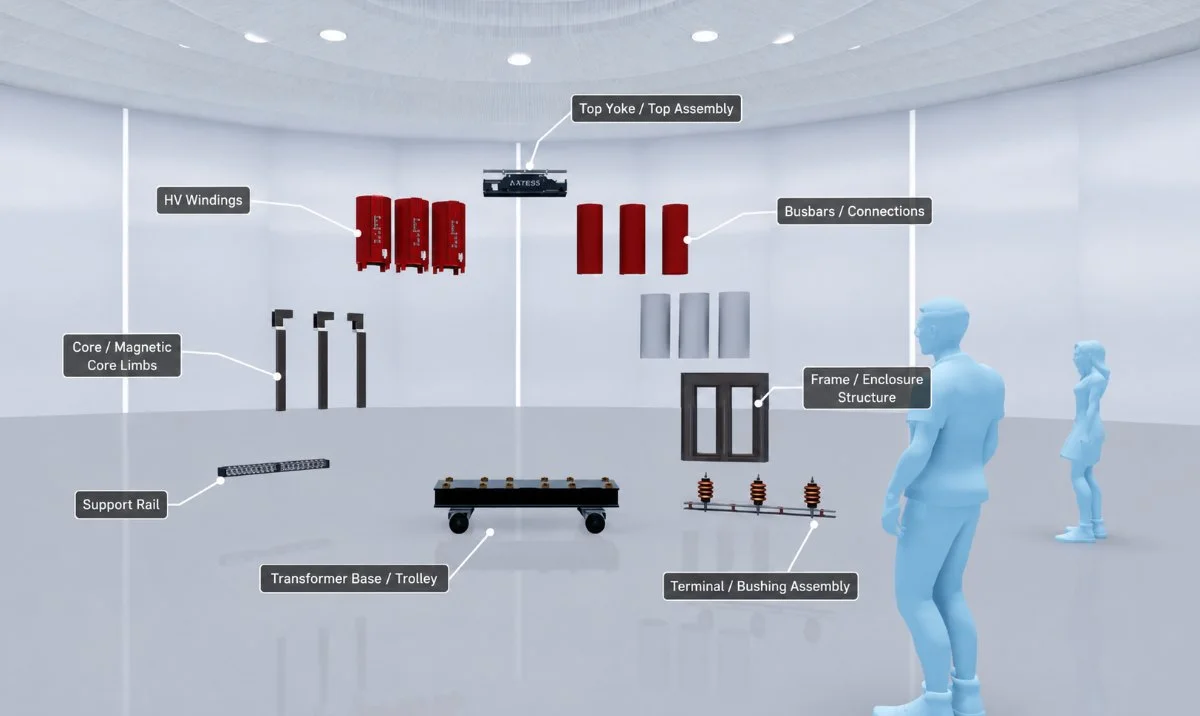
CoreElectrical VR modules - machines, power systems, transformers, drives, and control.
Complete Engineering
All disciplinesThe full engineering library - 240+ modules across mechanical, civil, and electrical, including Electrical Substation.
Custom rollout
QuotePick specific modules, devices, and seat counts. We'll scope a deployment for your department.
7thi and assessment in this module
7thi in this module
Students can ask 7thi questions at any point - about substation equipment and power flow or anything they see in the tour. 7thi answers in context, without breaking the flow.
Assessment
Session data - concepts mastered, time per scene, assessment scores - appears on the faculty dashboard. Export to your LMS via xAPI.
Keep exploring
Related engineering modules.
Is this a simulation or a tour?
It is a virtual industrial visit - a structured, explorable tour of a realistic substation, rather than a calculation-based experiment. It lets students see equipment and layouts that are unsafe or impractical to access physically.
What's the difference between Guided and Self-Explore modes?
Guided Tour Mode walks learners through the substation step by step with structured explanations. Self-Explore Mode lets them move freely and inspect the switchyard, transformers, control room, and feeders at their own pace.
What prior knowledge do students need?
Foundation-level understanding of power systems. Suitable for undergraduate Year 2 and above, and for diploma/polytechnic electrical programmes.
How long is a typical visit?
About 45 minutes to cover the full tour. Faculty can direct students to specific sections, and the environment can be revisited freely.
Which headsets is this module optimised for?
HTC, Meta Quest 2 / 3 / Pro, ClassVR, and any WebXR-compatible browser. It also runs in desktop browsers without a headset.
Tour an electrical substation in a demo.
Thirty minutes, the full module, your curriculum questions answered.