
VR Module · Civil · Engineering
Nuclear Density Gauge - VR experiment module.
Run a field density test in a virtual construction site - position the gauge, set the source rod, and measure wet density, dry density, and moisture content of compacted soil for earthwork and pavement quality control, with no radiation risk.
See it
Inside the module.
Learning objectives
By the end of this module, students will be able to:
Understand the purpose of a nuclear density gauge in field compaction testing
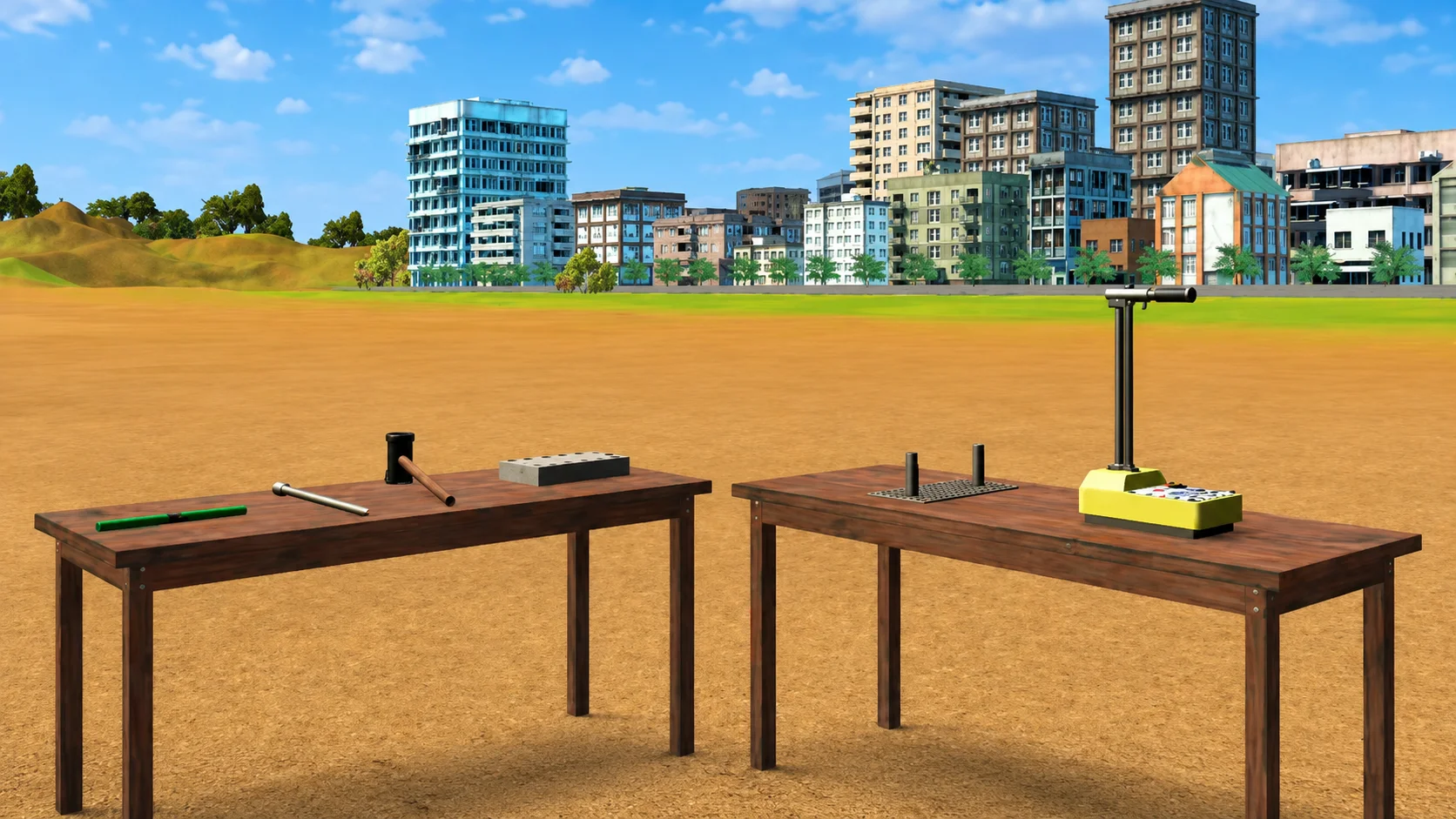
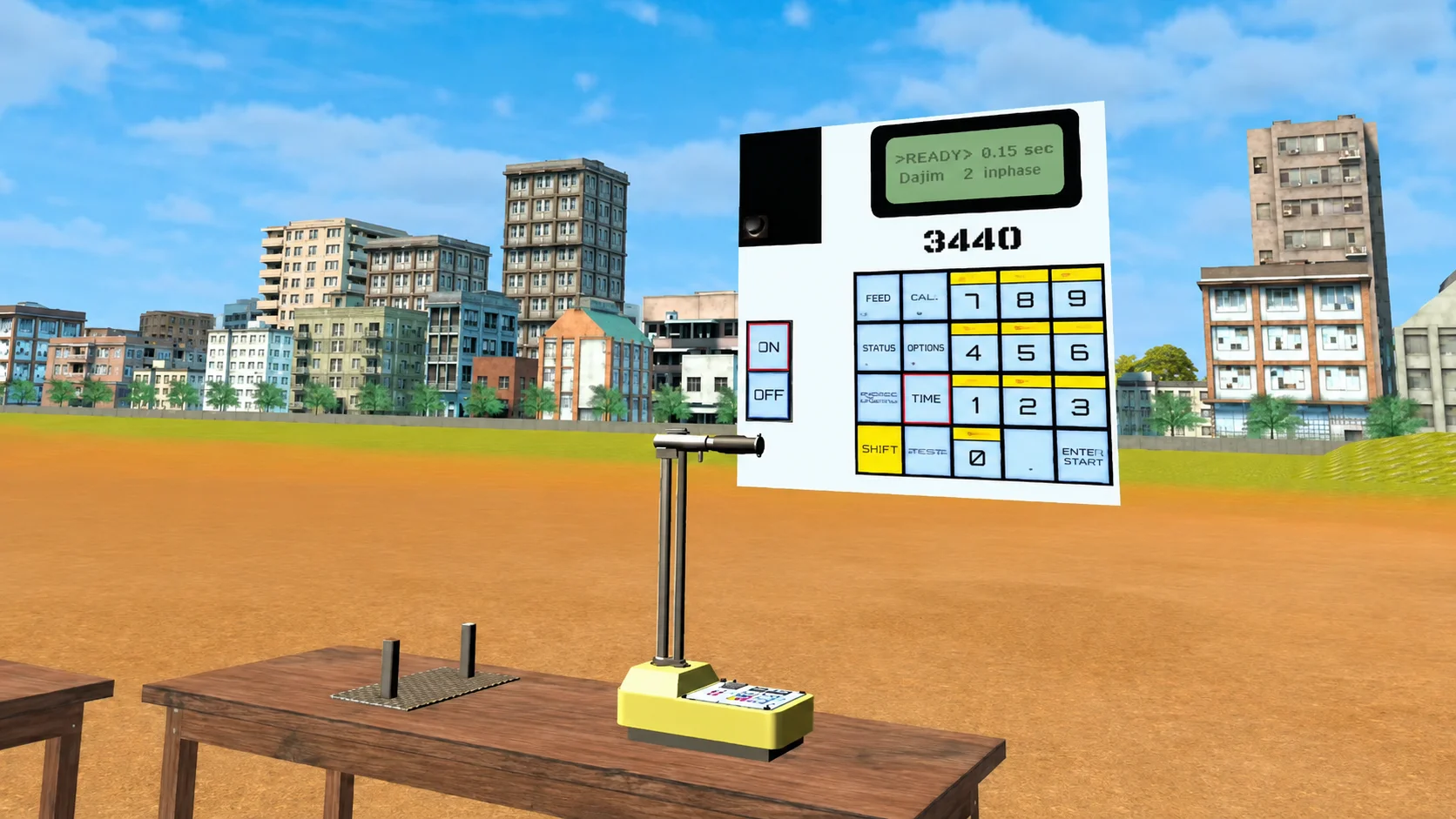
Identify key parts of the gauge - source rod, detector, control panel, base plate, handle, and display unit
Learn the test workflow for measuring wet density, dry density, and moisture content of soil
Understand how nuclear gauge testing supports soil compaction quality control
Relate field density results to Proctor compaction, optimum moisture content, and maximum dry density
Understand safe operating practices, calibration checks, test positioning, and site preparation
Interpret test readings for embankments, subgrades, pavement layers, and compacted fill
About the module
Field density testing, safely and repeatably.
A nuclear density gauge measures the density and moisture content of compacted soil and pavement layers directly in the field. It helps engineers verify whether a compacted layer has achieved the required density before the next construction stage begins.
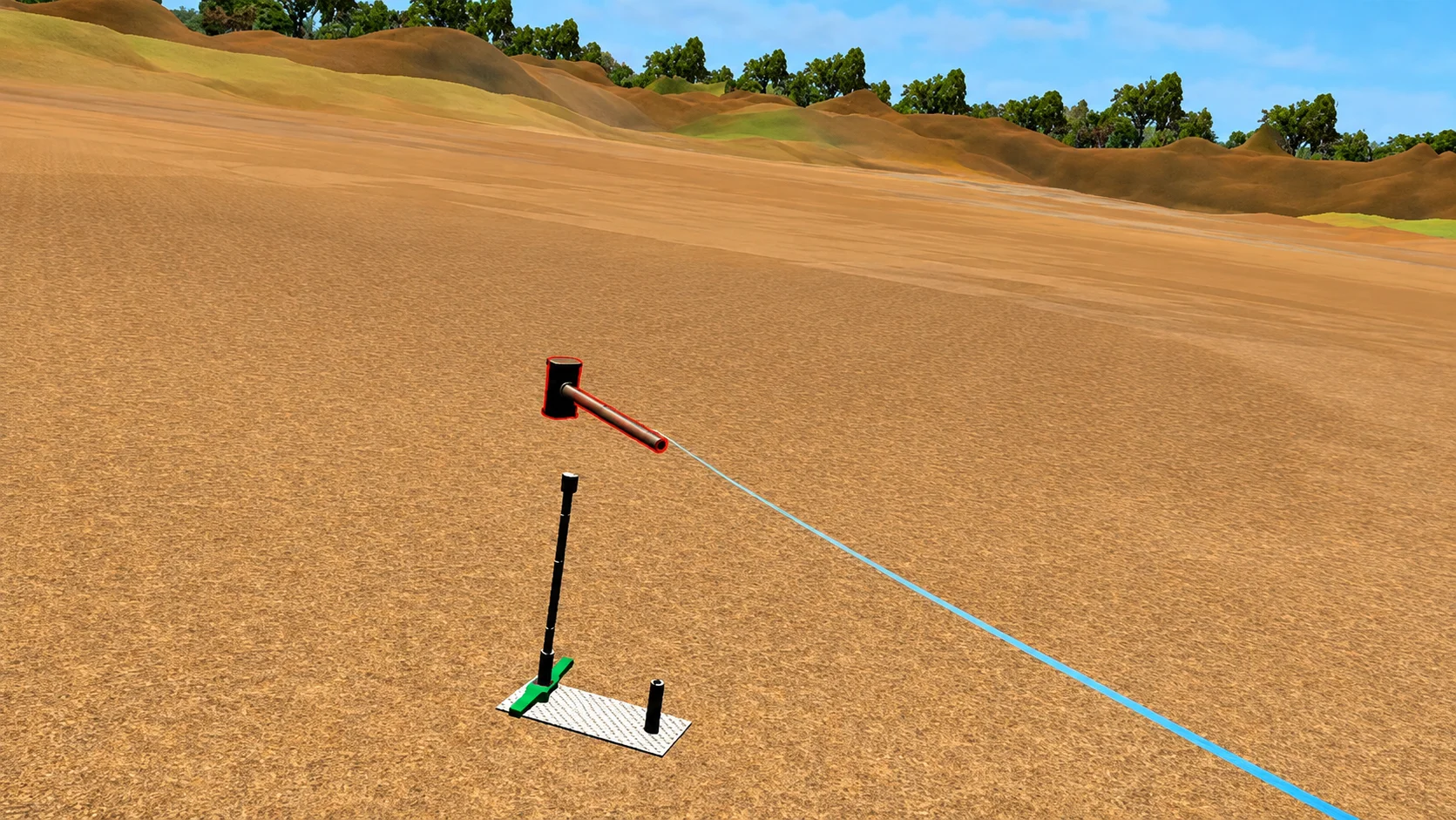
In this iXRLabs VR experiment module, learners perform the test in a virtual construction site. The module shows how the gauge is positioned on the surface, how the source rod is placed depending on the test method, and how the instrument measures density and moisture using radiation-based sensing principles - all without exposure to a radioactive source.
It builds the key geotechnical concepts - field density, dry density, moisture content, degree of compaction, maximum dry density, optimum moisture content, and relative compaction - and connects gauge readings to the compaction control used on highways, embankments, foundations, and earthwork. Because the experiment is virtual, learners can practise surface preparation, calibration checks, gauge placement, and reading interpretation as often as they need.
ABET (United States)
Supports Student Outcome 1 through engineering knowledge of soil compaction, density testing, and field quality control, and Student Outcome 6 through experimentation, measurement, and data interpretation.
NBA (India)
Maps to Course Outcomes in Soil Mechanics, Geotechnical Engineering Lab, Highway Engineering, and Construction Materials Testing; supports POs on investigation and modern tool usage (PO4, PO5).
University syllabi
Maps to soil mechanics lab experiments, highway material testing, field density procedures, lab records, and viva questions. Request a custom mapping.
AICTE / NEP 2020
Maps to Civil, Geotechnical, and Transportation Engineering and Construction Materials outcomes; supports experiential, skill-based, and safety-aware learning.
Get this module
Included in these iXRLabs packages.
Civil Engineering
CoreCivil VR modules - surveying, geotechnics, materials testing, structures, and construction.
Complete Engineering
All disciplinesThe full engineering library - 240+ modules across mechanical, civil, and electrical, including the Nuclear Density Gauge.
Custom rollout
QuotePick specific modules, devices, and seat counts. We'll scope a deployment for your department.
7thi and assessment in this module
7thi in this module
Students can ask 7thi about dry density, optimum moisture content, calibration, or relative compaction at any point. 7thi answers in context, without breaking the flow.
Assessment
Session data - concepts mastered, time per scene, assessment scores - appears on the faculty dashboard. Export to your LMS via xAPI.
Keep exploring
Related civil modules.
Is the test safe - there is no real radiation?
Correct. The experiment is fully virtual, so learners practise the full procedure repeatedly without any exposure to a radioactive source, equipment risk, or site constraints.
Which readings does the gauge produce?
Wet density, dry density, and moisture content - which the module links to degree of compaction, maximum dry density, and optimum moisture content from Proctor compaction.
What prior knowledge do students need?
Foundation-level soil mechanics or geotechnical engineering. Suitable for undergraduate Year 2 and above, and for diploma / polytechnic civil lab courses.
How long is a typical session?
About 20 minutes for a full run including assessment. Useful as pre-lab learning and for highway QA/QC training.
Which headsets is this module optimised for?
HTC, Meta Quest 2 / 3 / Pro, and any WebXR-compatible browser. It also runs in desktop browsers without a headset.
See the Nuclear Density Gauge in a demo.
Thirty minutes, the full module, your curriculum questions answered.