
3D Model · Civil · Engineering
Concrete Placer Boom Truck - 3D machine module.
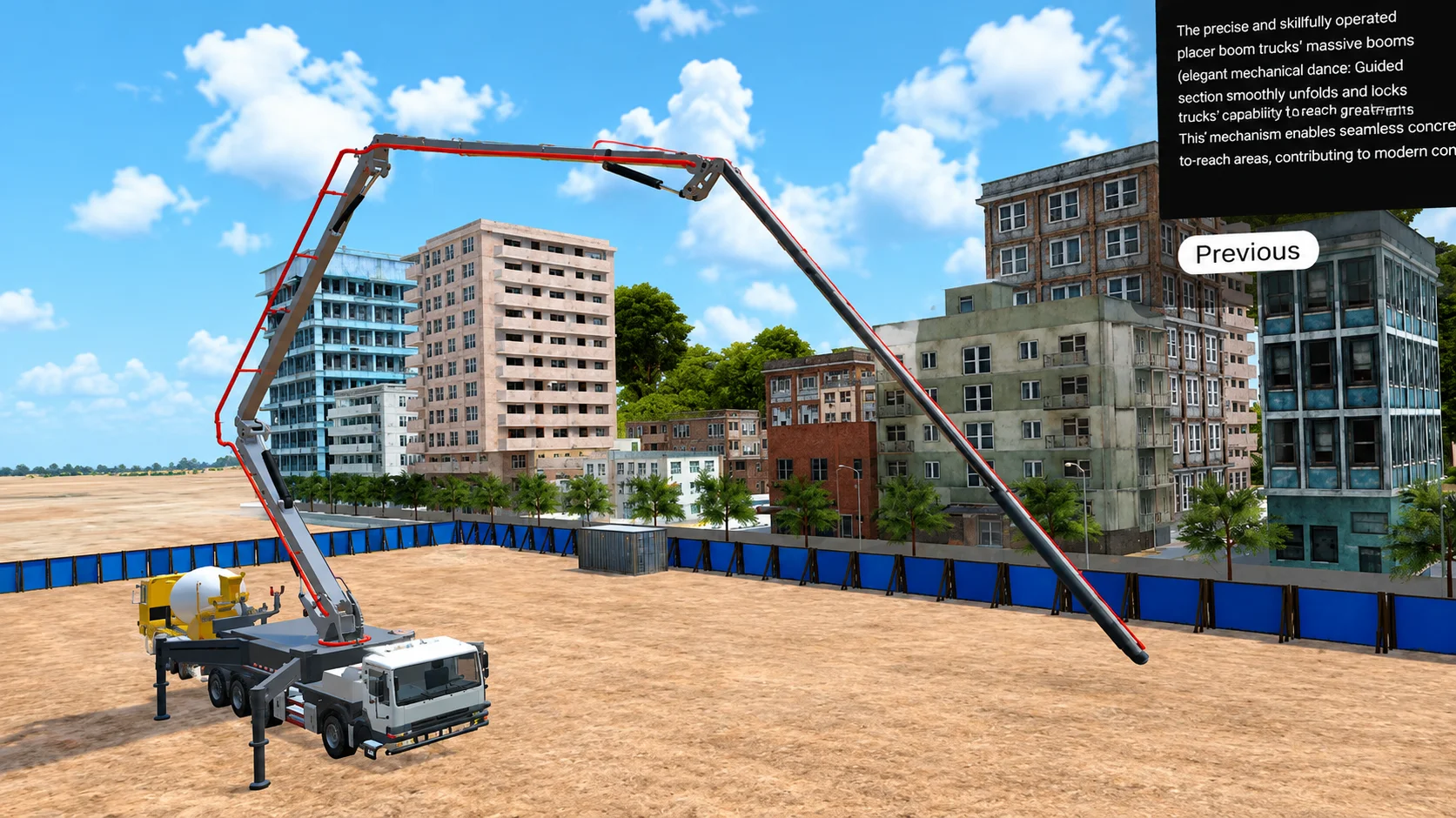
See how a truck-mounted concrete boom pump moves ready-mix concrete from the mixer to slabs, columns, and high-rise zones. Explore the hopper, pump, pipeline, boom sections, and end hose, and follow concrete from truck to placement.
See it
Inside the module.
Learning objectives
By the end of this module, students will be able to:
Identify the major parts of a concrete placer boom truck
Understand how concrete is pumped, transferred, and placed on site
Explain the role of the hopper, pump, pipeline, boom sections, hydraulic system, outriggers, and end hose
Understand boom movement, reach, positioning, and safe concrete placement
Relate concrete placing equipment to real construction site workflows
Understand site considerations such as stability, pumping pressure, pipe blockage, work-zone safety, and placement sequence
About the module
Mechanised concrete placement, as a working system.
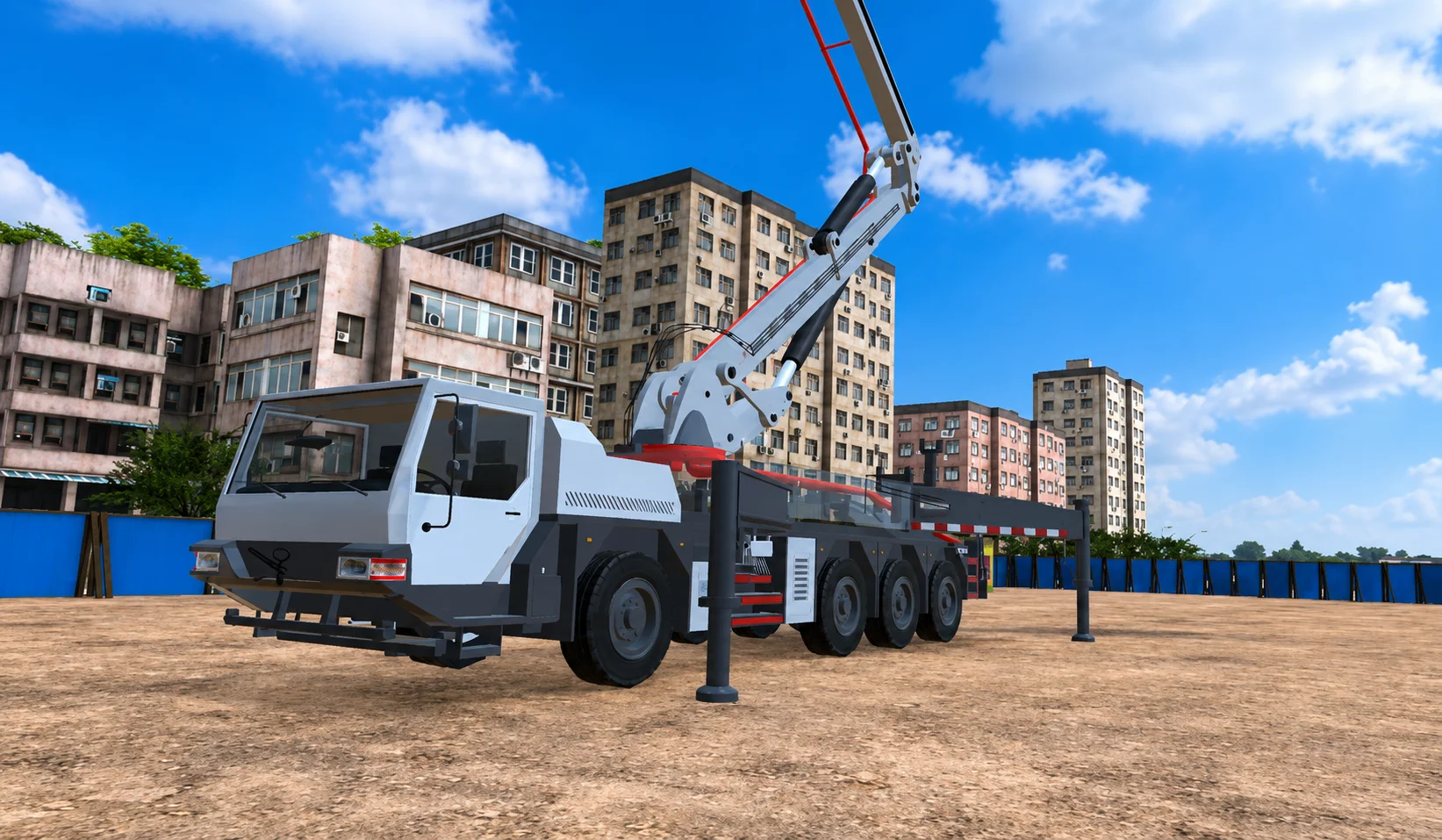
A concrete placer boom truck - also called a truck-mounted concrete boom pump - transports and places concrete efficiently at construction sites. It combines a concrete pump, hydraulic boom, delivery pipeline, and end hose on a mobile truck chassis, allowing concrete to be placed at height, depth, or distance without manual transportation.
In this iXRLabs machine module, learners view the placer boom truck as a complete working system. The module explains the flow of concrete from the mixer truck into the hopper, through the pumping mechanism, along the delivery pipeline, and finally through the boom and end hose to the placement location.
It covers the truck chassis, hopper, agitator, pumping cylinders, S-valve, hydraulic pump, boom sections and joints, delivery pipes, end hose, outriggers, and control panel - and introduces concrete workability, pumpability, boom reach, discharge control, pipeline pressure, placement accuracy, outrigger stability, and safe operating zones. It works well for machine familiarisation, construction-equipment demonstration, and pre-site-visit learning.
ABET (United States)
Supports Student Outcome 1 through engineering knowledge of construction systems, concrete placement, and equipment operation, and Student Outcome 7 through applied, industry-oriented understanding of construction machinery.
NBA (India)
Maps to Course Outcomes in Construction Equipment, Concrete Technology, Building Construction, and Construction Management; supports POs on engineering knowledge, modern tool usage, and safety.
University syllabi
Maps to construction equipment, concrete technology, building construction, site management, and industrial training units. Request a custom mapping.
NSQF / TVET
Maps to competency outcomes in construction equipment awareness, concrete handling, site operations, machinery safety, and quality-conscious concrete placement.
Get this module
Included in these iXRLabs packages.
Civil Engineering
CoreCivil VR modules - structures, construction, surveying, geotechnics, and construction equipment.
Complete Engineering
All disciplinesThe full engineering library - 240+ modules across mechanical, civil, and electrical, including the Concrete Placer Boom Truck.
Custom rollout
QuotePick specific modules, devices, and seat counts. We'll scope a deployment for your department.
7thi and assessment in this module
7thi in this module
Students can ask 7thi about pumpability, boom reach, outrigger stability, or any part they see on the truck. 7thi answers in context, without breaking the flow.
Assessment
Session data - concepts mastered, time per scene, assessment scores - appears on the faculty dashboard. Export to your LMS via xAPI.
Keep exploring
Related civil modules.
Does it show how concrete flows through the machine?
Yes. The module traces concrete from the mixer truck into the hopper, through the pumping cylinders and S-valve, along the pipeline, and out through the boom and end hose to the placement point.
Can students explore the boom movement?
Yes. Learners see how the boom is extended, folded, rotated, and positioned to cover large areas, along with the role of outriggers in stability.
What prior knowledge do students need?
Foundation-level construction or concrete technology. Suitable for undergraduate Year 2 and above, and for diploma / polytechnic civil courses.
How long is a typical session?
About 15 minutes for a full run including assessment. Useful as pre-site-visit learning before students see real equipment.
Which headsets is this module optimised for?
HTC, Meta Quest 2 / 3 / Pro, and any WebXR-compatible browser. It also runs in desktop browsers without a headset.
See the Concrete Placer Boom Truck in a demo.
Thirty minutes, the full module, your curriculum questions answered.