
VR Module · Civil · Engineering
Nuclear Density Gauge
Field Density - Soil Compaction
See it
Inside the module.
Learning objectives
By the end of this module, students will be able to:
Understand the purpose of a nuclear density gauge in field compaction testing
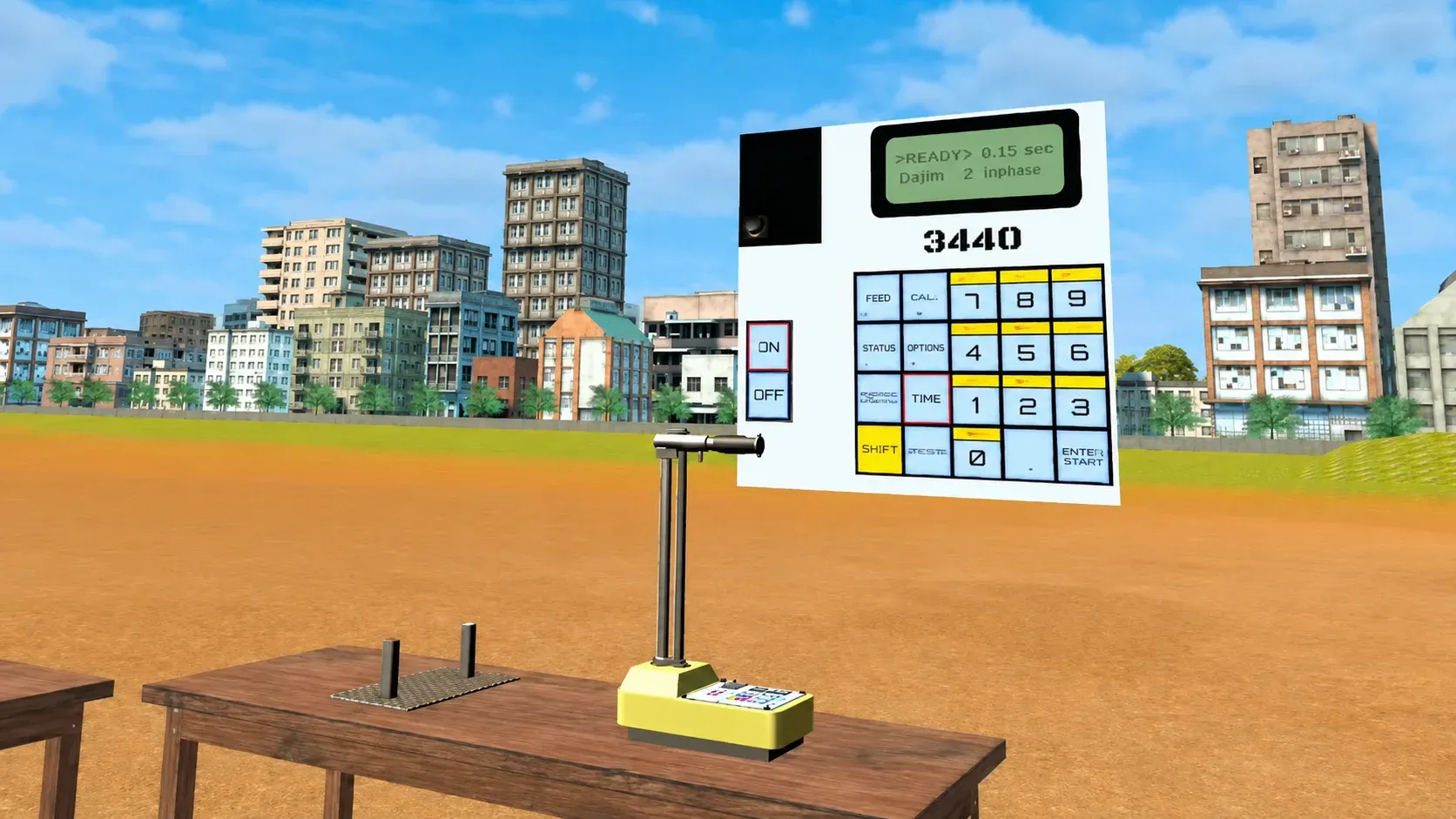
Identify key parts of the gauge - source rod, detector, control panel, base plate, handle, and display unit
Learn the test workflow for measuring wet density, dry density, and moisture content of soil
Understand how nuclear gauge testing supports soil compaction quality control
Relate field density results to Proctor compaction, optimum moisture content, and maximum dry density
Understand safe operating practices, calibration checks, test positioning, and site preparation
Interpret test readings for embankments, subgrades, pavement layers, and compacted fill
Field density testing, safely and repeatably.
A nuclear density gauge measures the density and moisture content of compacted soil and pavement layers directly in the field. It helps engineers verify whether a compacted layer has achieved the required density before the next construction stage begins.
In this iXRLabs VR experiment module, learners perform the test in a virtual construction site. The module shows how the gauge is positioned on the surface, how the source rod is placed depending on the test method, and how the instrument measures density and moisture using radiation-based sensing principles - all without exposure to a radioactive source.
It builds the key geotechnical concepts - field density, dry density, moisture content, degree of compaction, maximum dry density, optimum moisture content, and relative compaction - and connects gauge readings to the compaction control used on highways, embankments, foundations, and earthwork. Because the experiment is virtual, learners can practise surface preparation, calibration checks, gauge placement, and reading interpretation as often as they need.
Why run field density testing virtually?
- A nuclear gauge contains a sealed radioactive source, so student handling is tightly restricted or banned outright at most institutions.
- Licensing, storage and transport requirements mean many departments do not own a gauge at all.
- Compaction control is a judgement skill that needs repetition, and repetition is exactly what the real instrument does not allow.
- Students can deliberately get it wrong - poor surface preparation, wrong rod depth - and see the effect on the reading.
The test setup
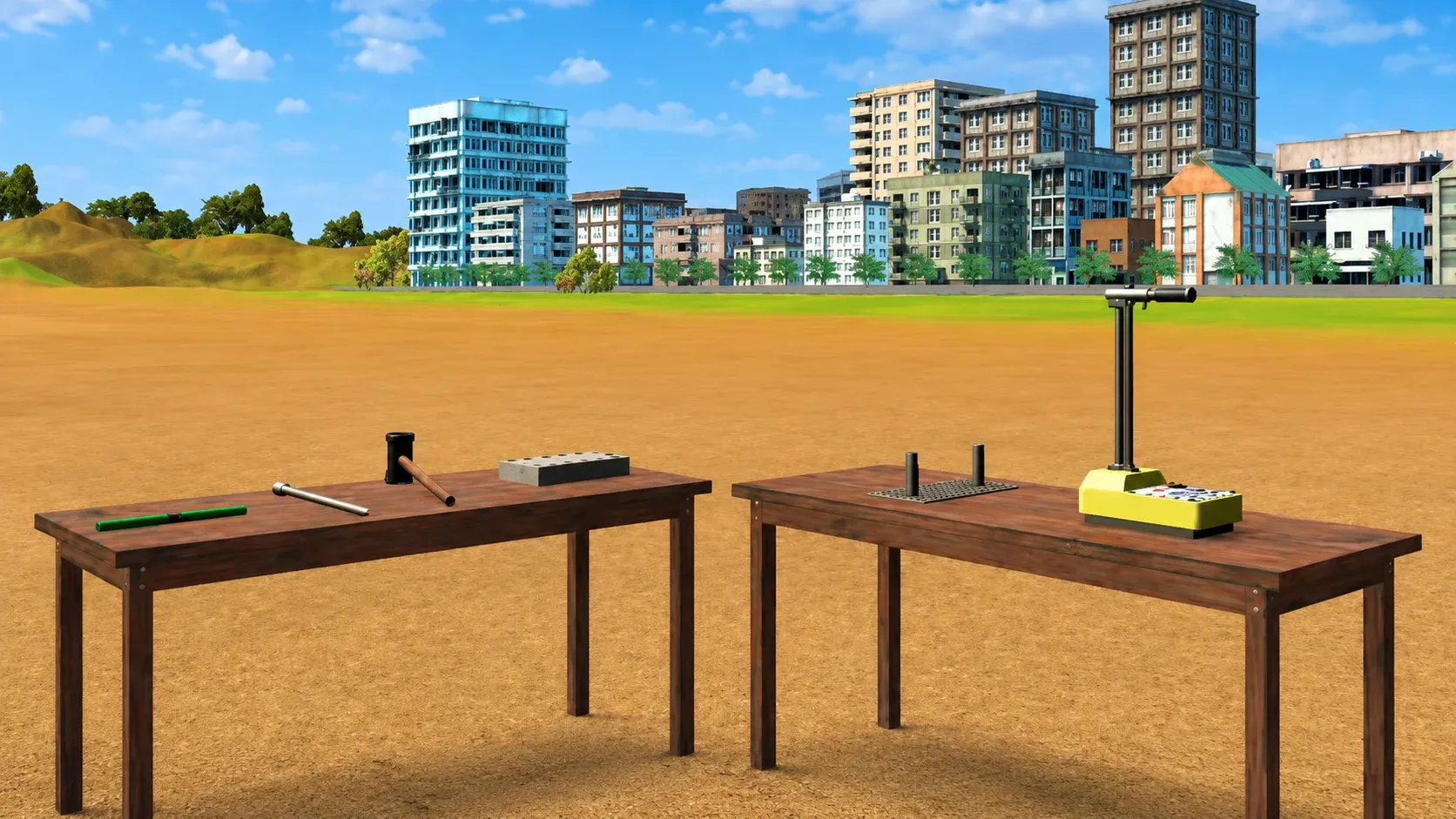
- Nuclear density gauge on its base plate
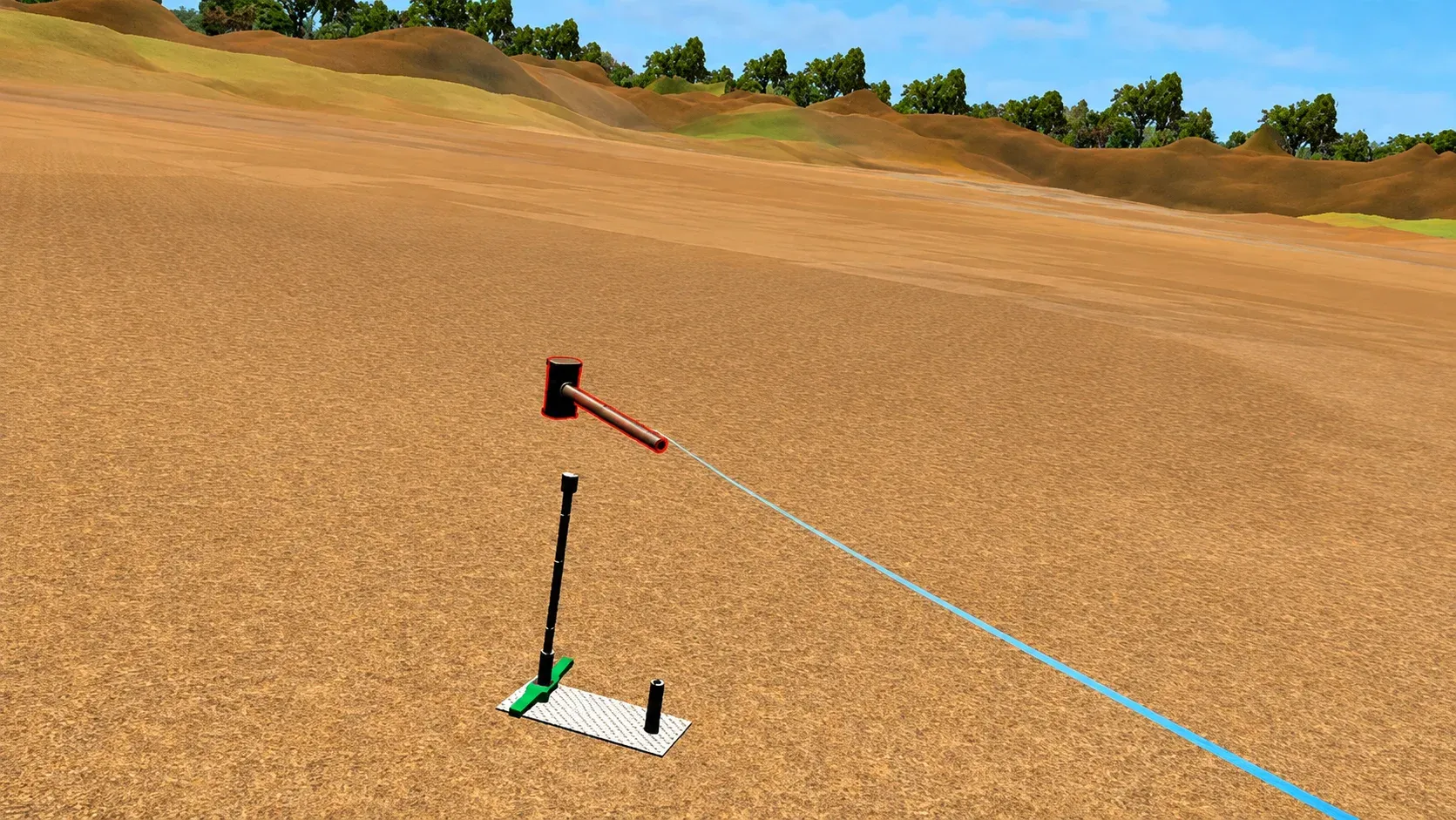
- Source rod and the drive hammer
- Scraper plate and prepared test surface
- Control panel, keypad, and display
- Reference standard for calibration checks
Concepts it makes tangible
- Field density, wet density, and dry density
- Moisture content and its effect on compaction
- Maximum dry density and optimum moisture content
- Degree of compaction and relative compaction
- How readings drive earthwork and pavement quality control
The test workflow
- Prepare and level the test surface
- Drive the source rod to the chosen depth
- Position the gauge and set the count time
- Run the reading and interpret density and moisture
- Repeat placements and calibration checks as often as needed
How faculty use it
- Pre-lab or pre-site-visit preparation
- Unlimited practice with zero radiation risk
- Remote or overflow lab when instruments are scarce
- Assessment of test procedure and reading interpretation
How the module works
The experiment runs on a virtual earthwork where students carry out the full field procedure. They prepare and level the test surface, drive the source rod to the correct depth for a direct-transmission measurement or leave it retracted for a backscatter reading, position the gauge, set the count time and take the reading. The gauge then reports wet density, dry density and moisture content, and the student compares the result against the required maximum dry density to make an accept-or-recompact decision. Because the whole test is simulated, students can deliberately prepare the surface badly or set the wrong rod depth and watch the reading drift, which teaches the sensitivity of the method far faster than a single correct run ever could.
What students take away
Students finish able to carry out a field density test end to end, choose between direct transmission and backscatter and explain the difference in measured depth, and interpret the results in terms of degree of compaction and relative compaction. They understand how a gauge reading becomes a quality-control decision on an earthwork or pavement layer, and they have internalised correct handling discipline for an instrument that, in reality, carries a sealed radioactive source.
In the classroom
In geotechnical, highway and construction materials courses, the module gives every student the compaction-control experience that a shared, licensed instrument cannot. It is used as pre-lab preparation before earthwork and pavement practicals, as a stand-in where no gauge is available at all, and as a way to build the judgement that quality control demands - the sense of when a reading means accept and when it means recompact. Because the whole test is repeatable, students can run enough measurements to develop that judgement rather than watching a single demonstration.
Interactive features and modes
The module lets students run the full field procedure - surface preparation, source rod placement, count time and reading - and switch between the direct transmission and backscatter methods to see how each changes the measured depth. Readings can be repeated without limit, and students can deliberately introduce errors, such as poor surface preparation or the wrong rod depth, to see how the result responds. Calibration checks against the reference standard are part of the workflow.
Why it matters
The nuclear density gauge is the standard tool for compaction control on roads, embankments and structural fill, yet it is one of the hardest instruments to teach with. It contains a sealed radioactive source, so student handling is restricted or banned outright, and the licensing, storage and transport rules mean many departments never own one. The result is that civil students often learn the single most important field quality test only from a diagram. A virtual gauge removes the radiological and regulatory barriers entirely, letting every student practise the judgement that compaction control actually requires.
The bigger picture
Compaction control sits at the intersection of soil mechanics and construction practice, and it is where a lot of real earthwork problems are caught or missed. The gauge does not measure quality directly; it measures density and moisture, which a student must then interpret against a target derived from a laboratory compaction test. That interpretive step - turning two numbers into a decision about whether a layer is fit to build on - is the actual skill, and it is one that improves only with repetition across many readings and many conditions. A virtual gauge makes that volume of practice possible for the first time in most curricula.
Devices, deployment and assessment
Deploying the module is straightforward. It runs on Meta Quest, ClassVR and Pico headsets, on WebXR-compatible browsers, and on the desktop without any headset at all, so a department can start with the hardware it already has and scale as it grows. Faculty can assign the whole module or specific scenes, set it as pre-lab preparation or post-lab revision, and track progress on a dashboard that records concepts mastered, time per scene and assessment scores, with export to the LMS via xAPI. The 7thi AI tutor answers student questions in context throughout, so learners are never left stuck and faculty are not fielding the same question forty times.
Who this module is for
- Civil engineering undergraduates from Year 2 in geotechnical, highway or materials courses
- Diploma and polytechnic students in civil and highway technology
- Departments without a licensed nuclear gauge on site
- Faculty preparing students for earthwork and pavement quality-control practicals
Syllabus alignment
Where this module fits.
ABET (United States)
Supports Student Outcome 1 through engineering knowledge of soil compaction, density testing, and field quality control, and Student Outcome 6 through experimentation, measurement, and data interpretation.
NBA (India)
Maps to Course Outcomes in Soil Mechanics, Geotechnical Engineering Lab, Highway Engineering, and Construction Materials Testing; supports POs on investigation and modern tool usage (PO4, PO5).
University syllabi
Maps to soil mechanics lab experiments, highway material testing, field density procedures, lab records, and viva questions. Request a custom mapping.
AICTE / NEP 2020
Maps to Civil, Geotechnical, and Transportation Engineering and Construction Materials outcomes; supports experiential, skill-based, and safety-aware learning.
Keep exploring
Related modules.
See Nuclear Density Gauge live in a demo.
Thirty minutes, the full module, your curriculum questions answered.
Is there any radiation risk in this module?
None. The gauge, the source rod and the readings are all simulated. Students learn correct handling discipline and the reasoning behind it without a sealed source ever being present.
Which test methods does it cover?
Direct transmission, where the source rod is driven into the layer, and backscatter measurement at the surface - along with how the choice of method changes the depth of material actually being measured.
What geotechnical concepts does it build?
Field density, wet and dry density, moisture content, maximum dry density, optimum moisture content, degree of compaction and relative compaction - and how a reading becomes an accept-or-recompact decision.
Can students practise the full test procedure?
Yes. Surface preparation and levelling, driving the source rod to depth, positioning the gauge, setting count time, taking the reading and running calibration checks against the reference standard.
Which headsets does this module run on?
HTC, Meta Quest, WebXR, plus any WebXR-compatible browser. It also runs on desktop without a headset, which covers faculty preview and remote cohorts. OpenXR and 6DOF headsets are supported.
Is the assessment graded automatically?
Yes. Scores reach the faculty dashboard immediately, pass thresholds are adjustable, and results export to your LMS via xAPI.
Is this mapped to our curriculum?
It is mapped to ABET, NBA and equivalent frameworks, and we map it to your own field density syllabus before deployment. Request a custom mapping.
Can this be used in a flipped classroom?
Yes. Students complete Nuclear Density Gauge before the lecture, so class time goes on analysis and discussion rather than first exposure to the topic.
Is there any radiation risk in this module?
None. The gauge, the source rod and the readings are all simulated. Students learn correct handling discipline and the reasoning behind it without a sealed source ever being present.
Which test methods does it cover?
Direct transmission, where the source rod is driven into the layer, and backscatter measurement at the surface - along with how the choice of method changes the depth of material actually being measured.
What geotechnical concepts does it build?
Field density, wet and dry density, moisture content, maximum dry density, optimum moisture content, degree of compaction and relative compaction - and how a reading becomes an accept-or-recompact decision.
Can students practise the full test procedure?
Yes. Surface preparation and levelling, driving the source rod to depth, positioning the gauge, setting count time, taking the reading and running calibration checks against the reference standard.
Which headsets does this module run on?
HTC, Meta Quest, WebXR, plus any WebXR-compatible browser. It also runs on desktop without a headset, which covers faculty preview and remote cohorts. OpenXR and 6DOF headsets are supported.
Is the assessment graded automatically?
Yes. Scores reach the faculty dashboard immediately, pass thresholds are adjustable, and results export to your LMS via xAPI.
Is this mapped to our curriculum?
It is mapped to ABET, NBA and equivalent frameworks, and we map it to your own field density syllabus before deployment. Request a custom mapping.
Can this be used in a flipped classroom?
Yes. Students complete Nuclear Density Gauge before the lecture, so class time goes on analysis and discussion rather than first exposure to the topic.