
VR Module · Physiology · Healthcare
Respiratory System - VR module.
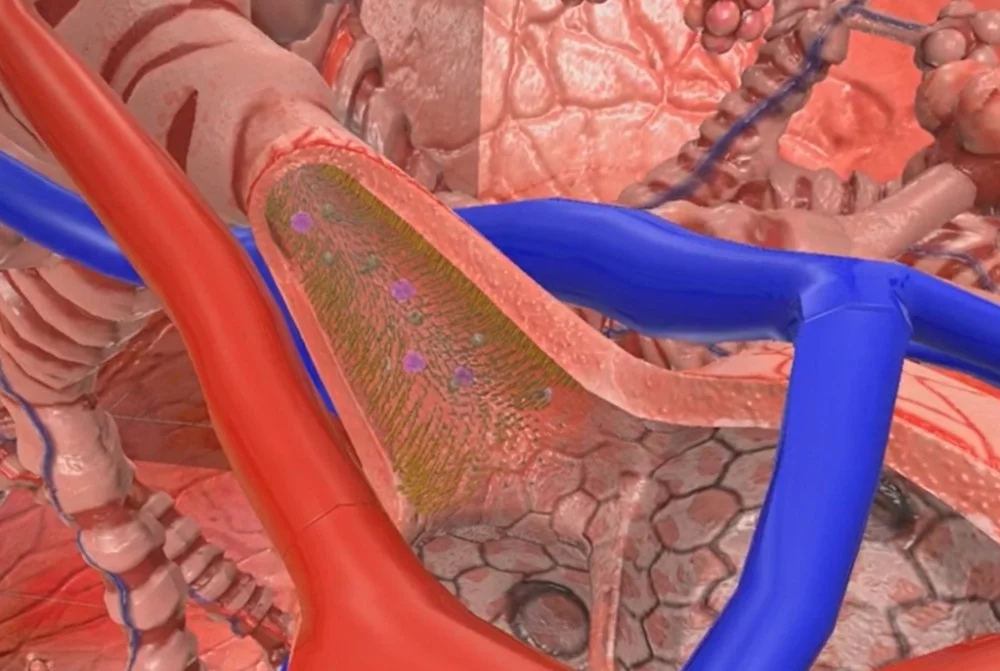
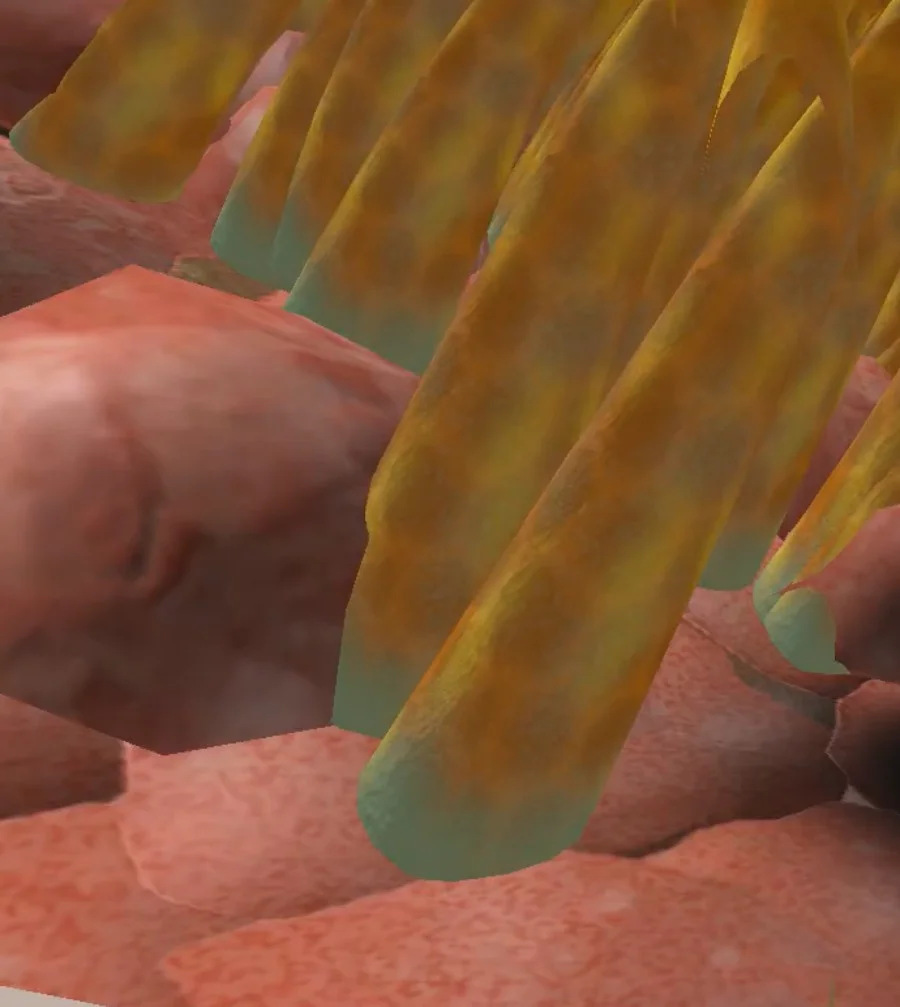
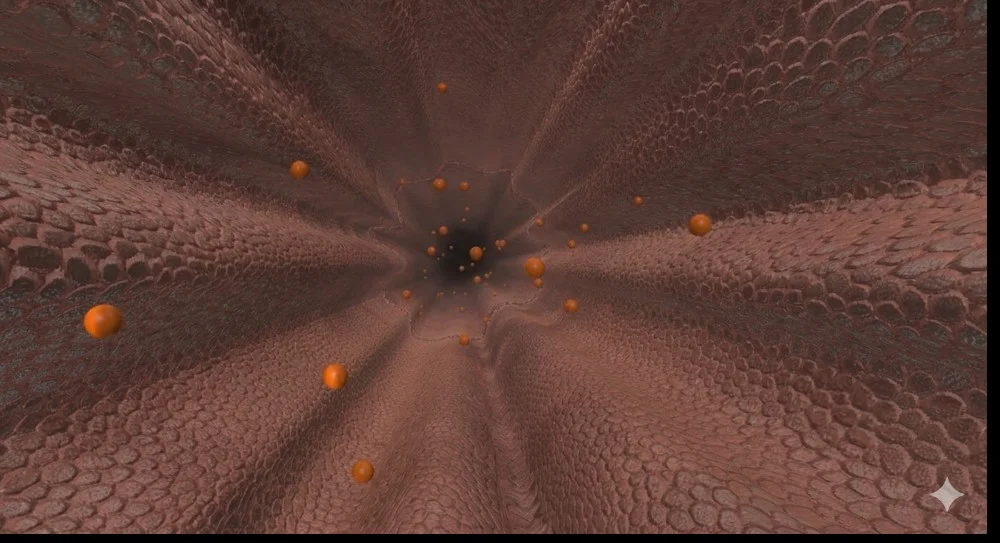
Travel from the airway to the alveolus in VR - follow gas exchange across the respiratory membrane and into the bloodstream, and see the ciliated epithelium that keeps the airway clear.
See it
Inside the module.
Learning objectives
By the end of this module, students will be able to:
Trace the path of air from the upper airway through the bronchial tree to the alveoli
Explain gas exchange across the respiratory membrane between alveolus and capillary
Describe how oxygen and carbon dioxide are carried in the bloodstream
Identify the role of ciliated epithelium and goblet cells in airway defence
Relate ventilation mechanics to the structure of the airway and alveoli
Complete a scaffolded assessment on respiratory structure and gas exchange
About the module
From the first breath to the bloodstream.
Respiration is a journey across scales - from whole-lung mechanics down to a single molecule crossing the respiratory membrane. Flat diagrams make that journey hard to picture. This module lets students travel it directly: down the airway, into an alveolus, and across into a capillary.
Along the way, students see the ciliated epithelium and goblet cells that line and protect the airway, watch the alveolar–capillary interface where oxygen and carbon dioxide swap, and follow those gases as they are carried away in the blood. Structure and function are shown together, at life-like scale.
The 7thi AI tutor sits alongside the whole experience, scaffolding the difficult parts and giving subject-aware answers in context. Built-in assessment lets faculty see, per student, who has grasped which concepts - without grading another paper.
University syllabi
We map this module to your institution's own respiratory physiology syllabus before deployment. Request a custom mapping.
Competency-based curriculum (Global)
Aligned with competency-based medical and nursing education outcomes for respiratory physiology. Detailed mapping available on request.
NMC (India)
Supports National Medical Commission competency outcomes for the respiratory system. Detailed mapping available on request.
Get this module
Included in these iXRLabs packages.
Physiology
Most popularAnatomy plus the full physiology library - structure and function, taught together.
Complete Healthcare
All subjectsThe full healthcare library, including the Respiratory System.
Custom rollout
QuotePick specific modules, devices, and seat counts. We'll scope a deployment for your department.
7thi and assessment in this module
7thi in this module
Students can ask 7thi questions at any point - about gas exchange, airway structure, or anything they see in the simulation. 7thi answers in context, without breaking the flow.
Assessment
Session data - concepts mastered, time per scene, assessment scores - appears on the faculty dashboard. Export to your LMS via xAPI.
Keep exploring
Related healthcare modules.
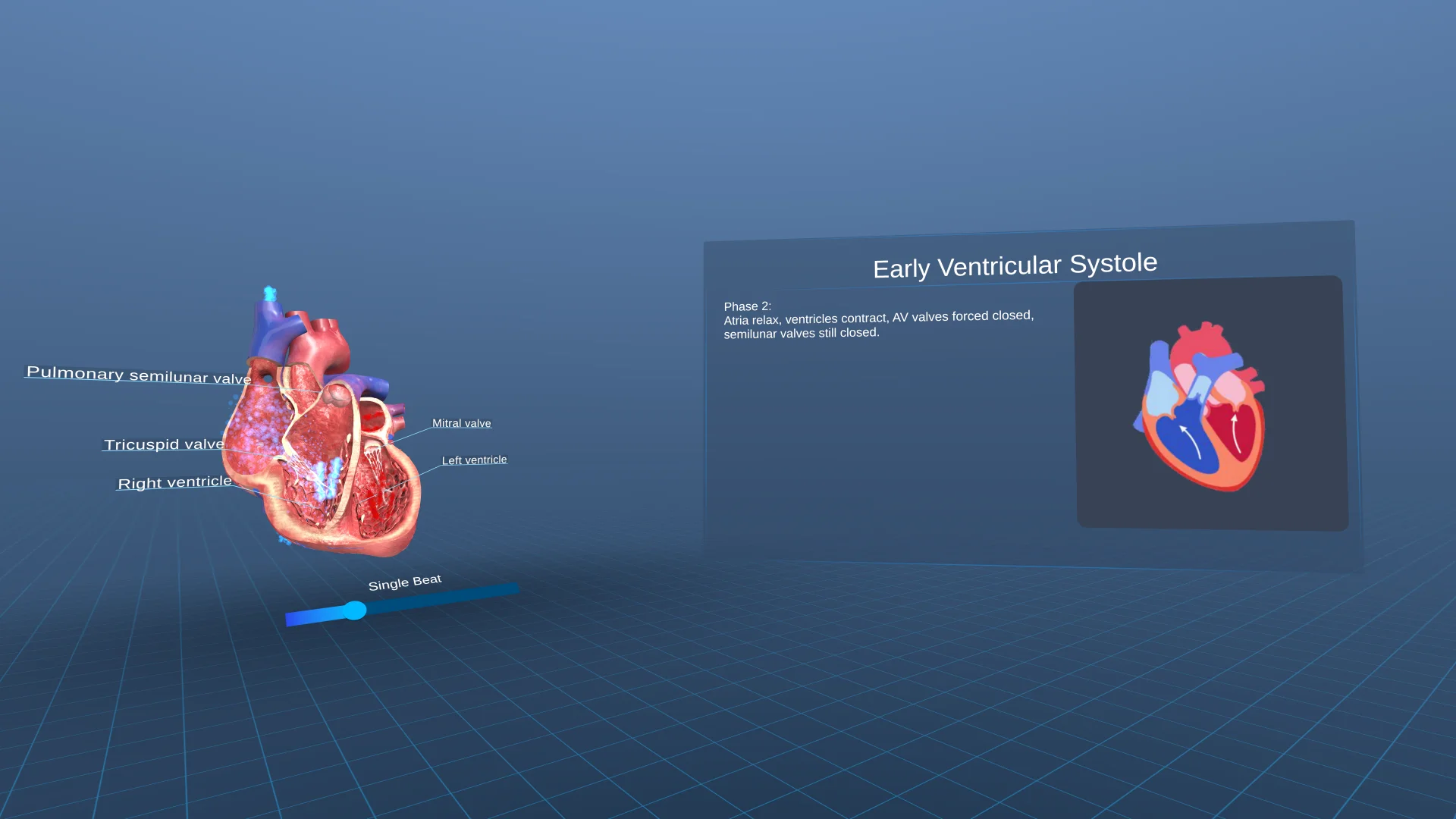
Cardiac Cycle
Watch systole and diastole unfold, with pressure and volume in sync.
View module
Healthcare library
Anatomy, physiology, and clinical modules with the 7thi AI tutor.
Explore healthcareBrowse the full library
Explore every iXRLabs VR module across engineering, sciences, and healthcare.
View catalogueWhat prior knowledge do students need?
Foundation-level understanding of human anatomy. Suitable for undergraduate students and above.
How long is a typical session?
About 35 minutes for a full run including assessment. Students can pause and resume, and faculty can assign specific parts rather than the whole module.
Can this be used in a flipped classroom?
Yes. Students complete the VR module before the lecture, so class time focuses on analysis and discussion.
Is the assessment graded automatically?
Yes. Assessment scores appear on the faculty dashboard immediately. Faculty can adjust pass thresholds and export results to their LMS.
Which headsets is this module optimised for?
Meta Quest 2 / 3 / Pro, ClassVR, Pico, and any WebXR-compatible browser. It also runs in desktop browsers without a headset. We also support the Meta XR SDK, OpenXR, and any 6DOF headset.
See the Respiratory System live in a demo.
Thirty minutes, the full module, your curriculum questions answered.