
VR Module · Zoology · Sciences
Rat Dissection - VR module.
Perform a guided virtual rat dissection - explore the external features and the major organ systems of a mammalian model in a safe, ethical, repeatable lab, without a physical specimen.
See it
Inside the module.
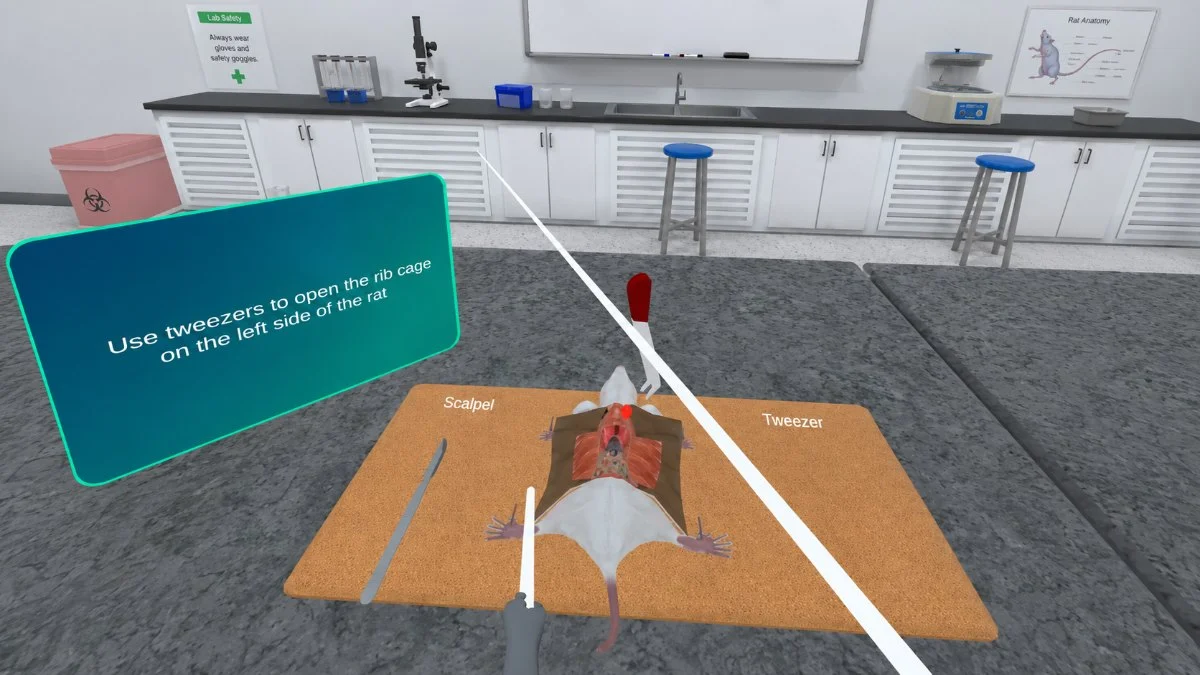
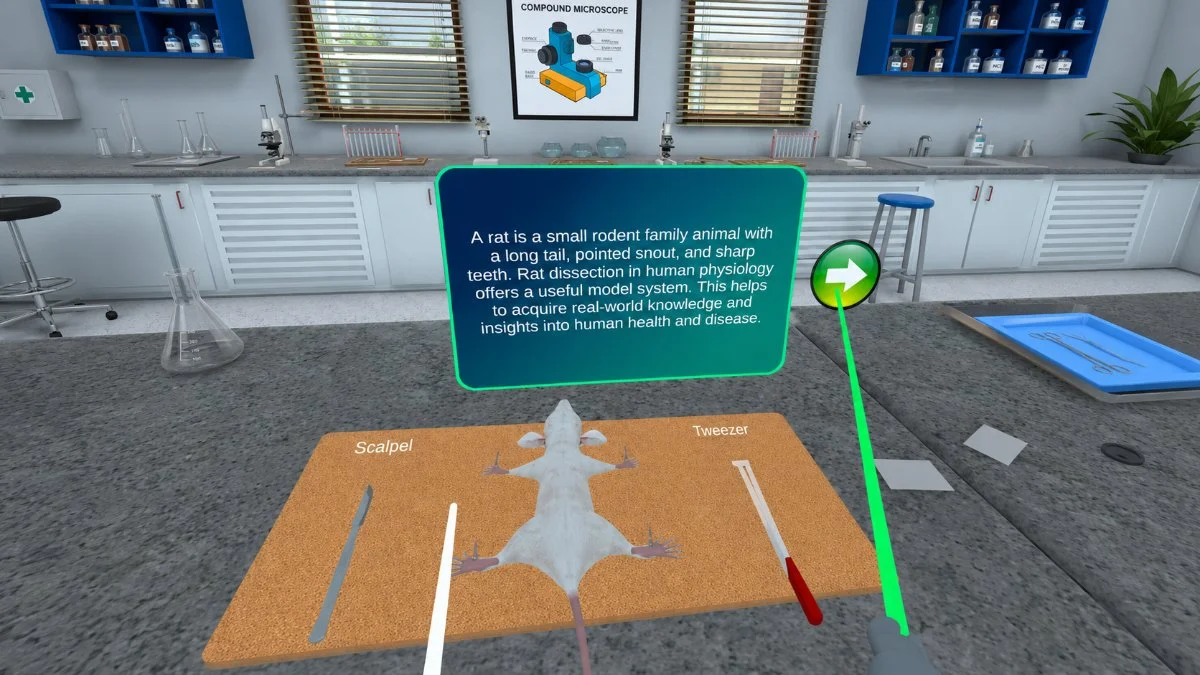
Learning objectives
By the end of this module, students will be able to:
Identify the external features of a rat and understand its use as a mammalian anatomy model
Perform the key steps of a rat dissection in a guided virtual lab environment
Locate and identify major organs of the digestive, respiratory, circulatory, excretory, and reproductive systems
Understand the anatomical position and relationship between organs
Compare mammalian organ systems with standard zoology and physiology theory
Practise dissection etiquette, observation skills, and specimen-handling sequence in a humane format
About the module
A humane, repeatable dissection - without a specimen.
The rat is a classic representative mammal for studying vertebrate anatomy, organ systems, and physiological organisation. This module recreates that practical in VR, letting students explore rat anatomy through a structured virtual dissection that meets the goals of a traditional zoology lab - without depending on a physical specimen.
Learners are guided step by step, from external observation to internal exploration. They open the body cavity, identify key organs, and see how the digestive, respiratory, circulatory, excretory, and reproductive systems are arranged - observing the heart, lungs, liver, stomach, intestine, kidneys, reproductive organs, and associated glands.
Because it is virtual, the dissection is safe, repeatable, and humane - ideal for pre-lab preparation, practical revision, anatomy demonstrations, and as an ethical alternative to repeated physical dissection. The 7thi AI tutor is on hand throughout, and built-in assessment shows faculty who has grasped each concept.
UGC / NEP 2020
Supports experiential, digital, multidisciplinary, and skill-based learning in Zoology, Life Sciences, and Biology practicals - useful as a virtual lab component for anatomy and physiology.
NAAC / Outcome-Based Education
Evidences ICT-enabled teaching, ethical learning alternatives, and improved access to lab-based education, supporting practical learning outcomes and student engagement.
University syllabi
Maps to B.Sc. Zoology, Life Sciences, Animal Physiology, and Comparative Anatomy practical syllabi - including practical objectives, lab-record outcomes, viva preparation, and assessment rubrics. Request a custom mapping.
Ethics & Animal Welfare
Supports humane, repeatable, low-risk anatomy learning by reducing the need for repeated physical dissections - useful for pre-dissection training and ethical alternatives.
Get this module
Included in these iXRLabs packages.
Sciences
CoreCurriculum-aligned science VR modules across chemistry, physics, and biology.
Complete Sciences
All subjectsThe full sciences library, including Rat Dissection.
Custom rollout
QuotePick specific modules, devices, and seat counts. We'll scope a deployment for your department.
7thi and assessment in this module
7thi in this module
Students can ask 7thi questions at any point - about rat anatomy and the organ systems or anything they see in the dissection. 7thi answers in context, without breaking the flow.
Assessment
Session data - concepts mastered, time per scene, assessment scores - appears on the faculty dashboard. Export to your LMS via xAPI.
Keep exploring
Related sciences modules.
Does this require a physical specimen?
No. The entire dissection is virtual, so students can repeat it as often as they like with no specimens, no waste, and no biohazard - a humane, ethical alternative to physical dissection.
What prior knowledge do students need?
Foundation-level biology. Suitable for B.Sc. Zoology, Life Sciences, and Biology undergraduates from Year 1, and for pre-lab preparation before a physical dissection.
How long is a typical session?
About 20 minutes for a full run including assessment. Students can pause and resume, and faculty can assign specific systems rather than the whole module.
Which organ systems are covered?
The digestive, respiratory, circulatory, excretory, and reproductive systems, plus major glands - with organs such as the heart, lungs, liver, stomach, intestine, and kidneys.
Which headsets is this module optimised for?
HTC, Meta Quest 2 / 3 / Pro, ClassVR, and any WebXR-compatible browser. It also runs in desktop browsers without a headset.
See Rat Dissection live in a demo.
Thirty minutes, the full module, your curriculum questions answered.