
VR Module · Anatomy · Healthcare
Human Heart Anatomy - VR module.
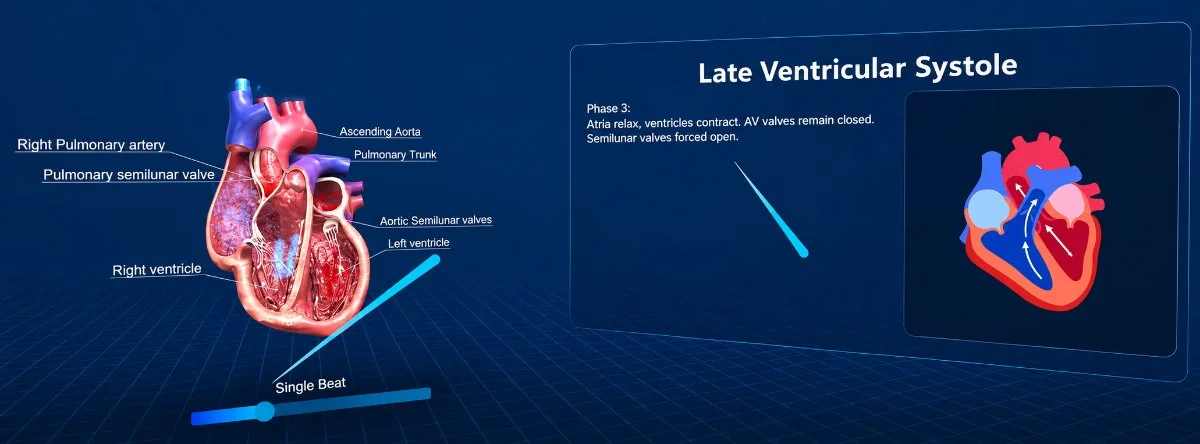
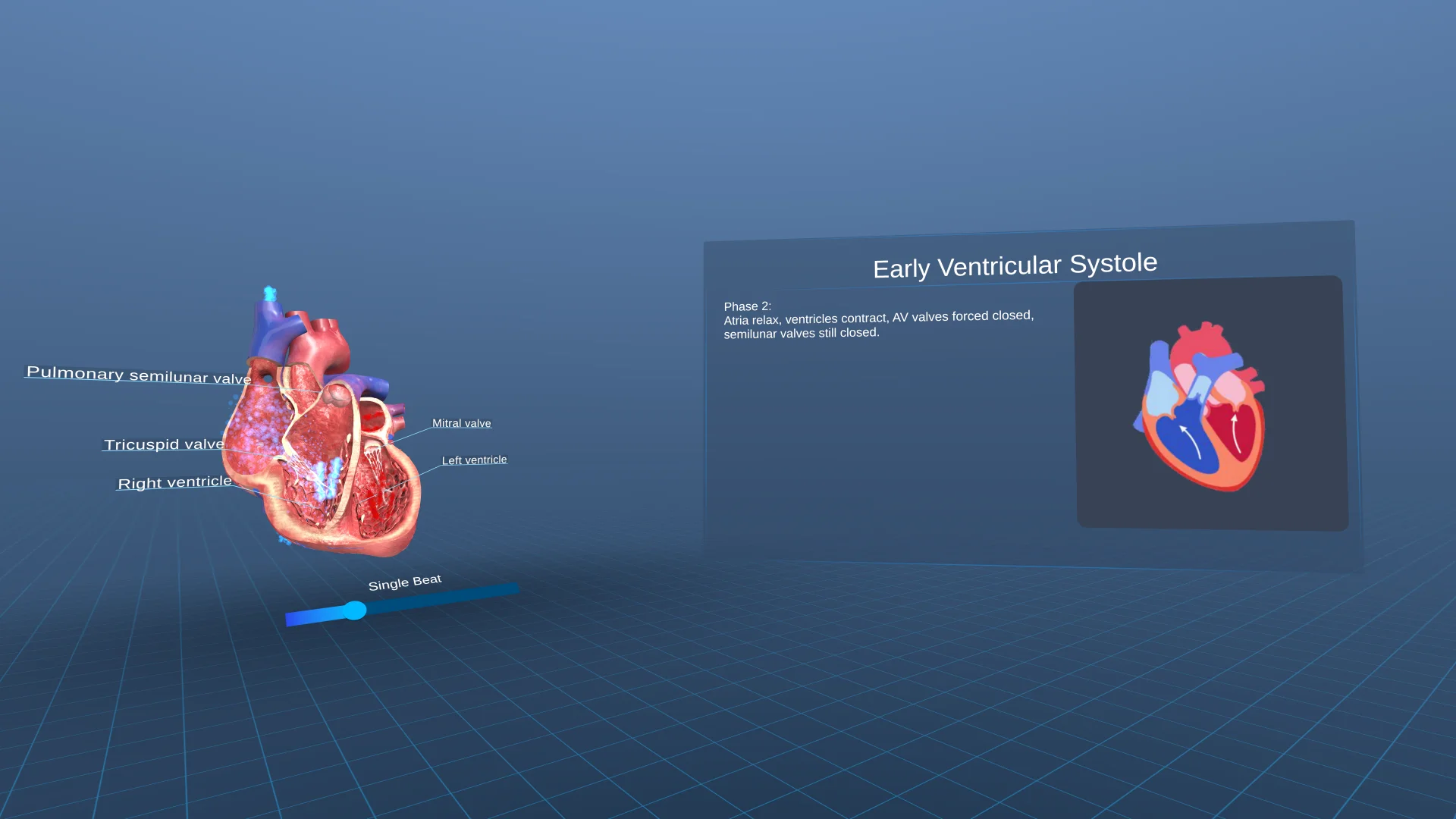
Explore the human heart as a complete 3D model - identify the chambers, valves, septum, and great vessels, see inside views, and follow oxygenated and deoxygenated blood through the cardiac cycle.
See it
Module media.
Learning objectives
By the end of this module, students will be able to:
Identify the major parts of the heart - atria, ventricles, valves, septum, aorta, vena cava, pulmonary artery, and pulmonary veins
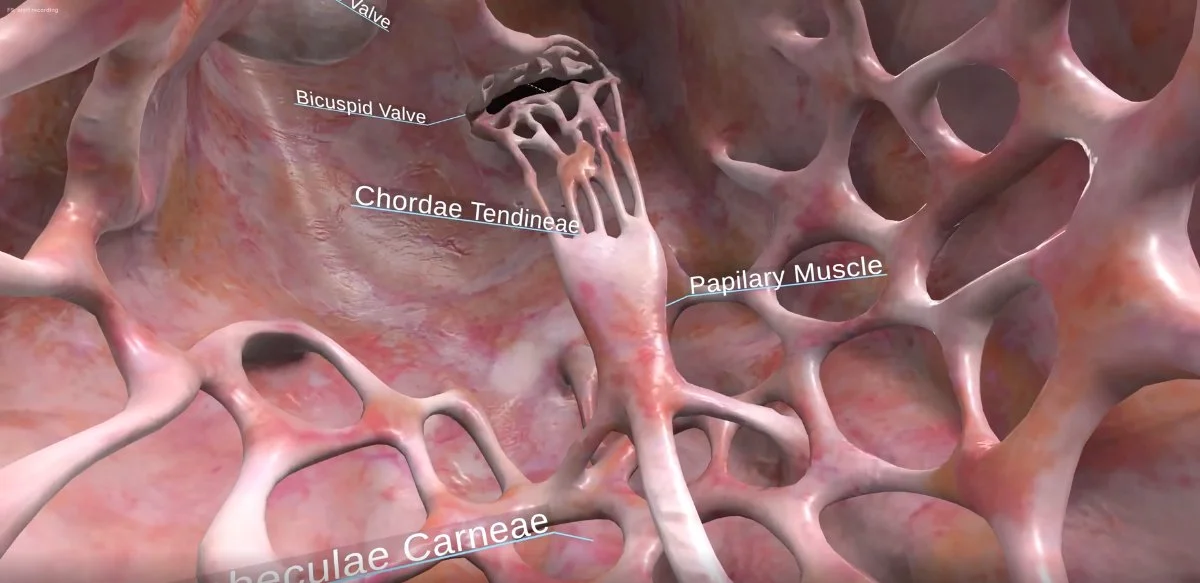
Understand the internal structure of the heart through sectional and inside views
Explain the path of oxygenated and deoxygenated blood through the heart
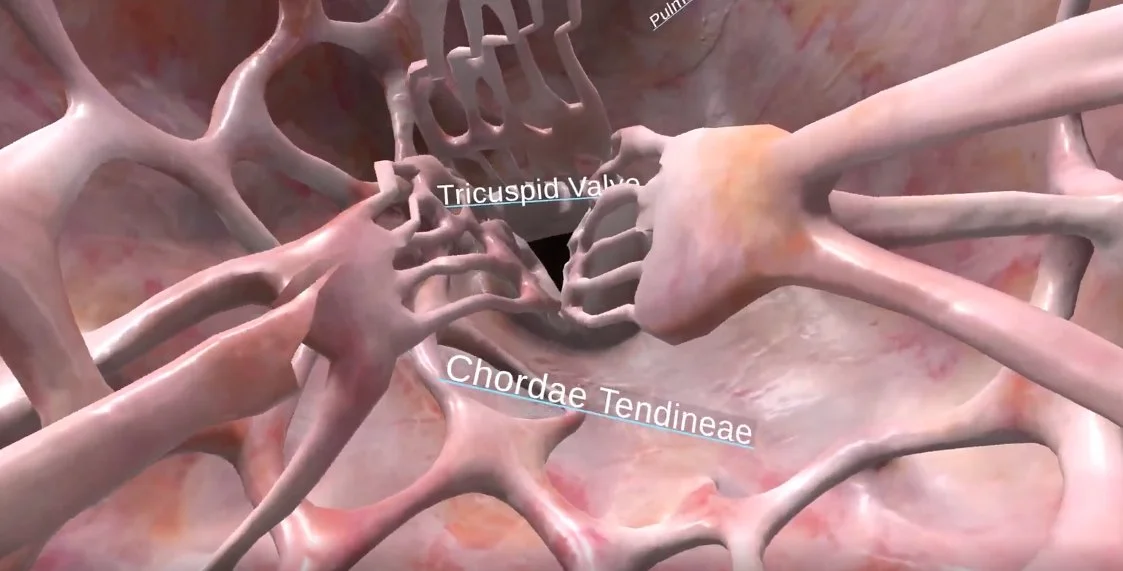
Understand the role of valves in maintaining one-way blood flow
Visualise the basic cardiac cycle - contraction, relaxation, filling, and pumping
Relate heart anatomy to physiology, circulation, and common clinical concepts
About the module
The heart as a complete 3D system.
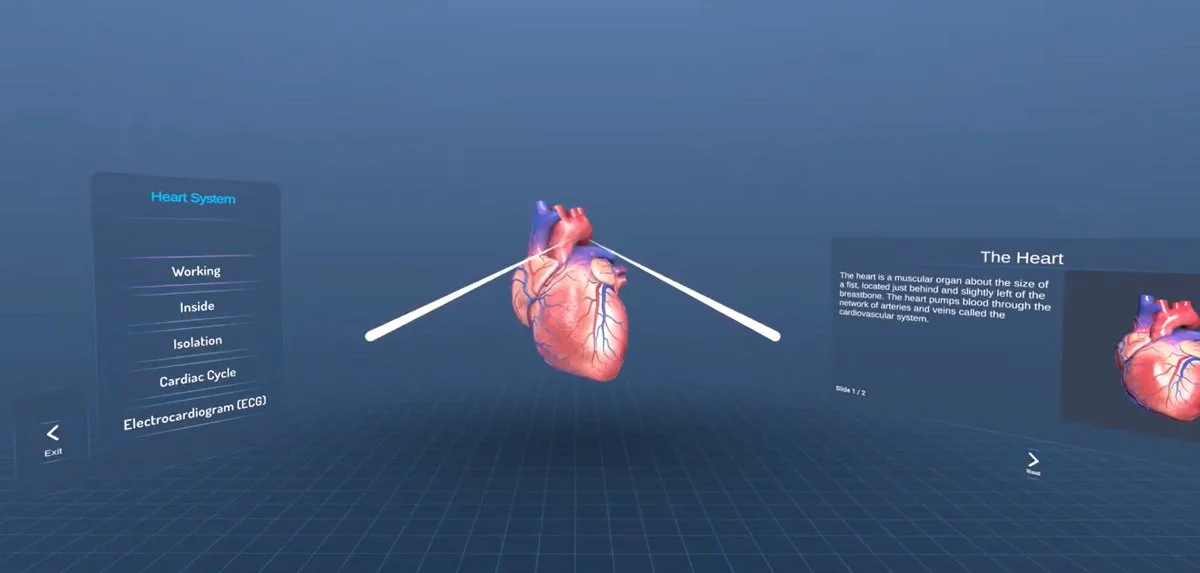
The human heart is a muscular organ that pumps blood throughout the body, maintaining both systemic and pulmonary circulation. This 3D module lets learners explore it as a complete anatomical and functional system - rotating the external anatomy, sectioning it, and stepping inside the chambers.
Students examine the internal chambers, observe valve positions, and follow how blood moves through the right and left sides of the heart. Key physiological concepts come to life - the circulation pathway, ventricular contraction, valve opening and closing, and the movement of oxygenated and deoxygenated blood.
The inside view takes students beyond textbook diagrams to understand the spatial relationships between chambers, valves, vessels, and muscular walls - ideal for anatomy demonstrations, physiology teaching, pre-lab learning, and revision. The 7thi AI tutor is on hand throughout, and built-in assessment shows faculty who has grasped each concept.
Nursing & Allied Health syllabi
Maps to foundational anatomy and physiology units in Nursing, Physiotherapy, Allied Health, Biomedical Science, and Life Sciences programmes.
NMC / CBME (India)
Indicatively supports anatomy and physiology learning outcomes related to cardiovascular structure, circulation, and function.
University syllabi
Maps to institution-specific anatomy and physiology syllabi, practical records, assignments, and assessment rubrics. Request a custom mapping.
Get this module
Included in these iXRLabs packages.
Healthcare
CoreAnatomy, physiology, and nursing VR modules with the 7thi AI tutor.
Complete Healthcare
All subjectsThe full healthcare library, including Human Heart Anatomy.
Custom rollout
QuotePick specific modules, devices, and seat counts. We'll scope a deployment for your department.
7thi and assessment in this module
7thi in this module
Students can ask 7thi questions at any point - about heart anatomy, blood flow, or anything they see in the model. 7thi answers in context, without breaking the flow.
Assessment
Session data - concepts mastered, time per scene, assessment scores - appears on the faculty dashboard. Export to your LMS via xAPI.
Keep exploring
Related healthcare modules.
What prior knowledge do students need?
Foundation-level biology. Suitable for first-year Medical, Nursing, Allied Health, and Life Sciences students and above.
How long is a typical session?
About 20 minutes to explore the model fully. Students can pause and resume, and faculty can focus on specific structures.
Can this be used in a flipped classroom?
Yes. Students complete the VR module before the lecture, so class time focuses on analysis and discussion.
Is the assessment graded automatically?
Yes. Assessment scores appear on the faculty dashboard immediately. Faculty can adjust pass thresholds and export results to their LMS.
Which headsets is this module optimised for?
Meta Quest 2 / 3 / Pro, ClassVR, Pico, and any WebXR-compatible browser. It also runs in desktop browsers without a headset. We also support the Meta XR SDK, OpenXR, and any 6DOF headset.
See Human Heart Anatomy live in a demo.
Thirty minutes, the full module, your curriculum questions answered.