
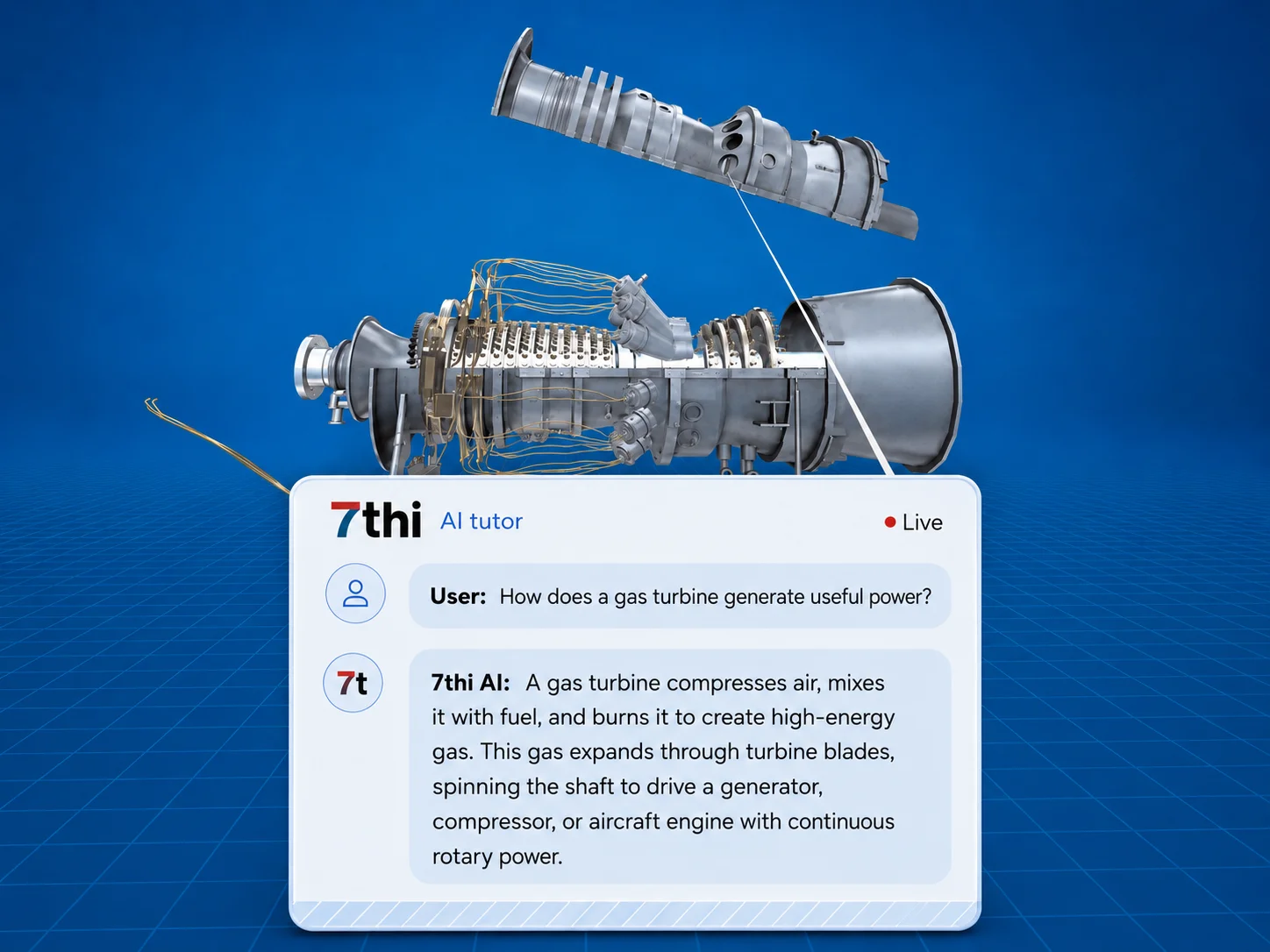
Jet Engine Teardown400×300
3D Models
Life-size, manipulable models: rotate, take apart, look inside. Engines, turbines, gearboxes.
VR Labs · Mechanical Engineering
The deepest mechanical engineering VR library in the market - 100 modules across thermodynamics, fluid mechanics, machine design, and manufacturing. Built with universities, mapped to syllabi, ready for the classroom.
Recognised by Meta · ISO Certified · 10+ years in EdTech
The scale claim
100 VR modules across thermodynamics, fluid mechanics, machine design, manufacturing, heat transfer, and IC engines. From the first-year mechanics lab to final-year plant tours, built in collaboration with faculty.
Inside the mechanical library
From explorable 3D engine models to full thermal-plant tours. Every mechanical module is built for a specific kind of learning.
Life-size, manipulable models: rotate, take apart, look inside. Engines, turbines, gearboxes.
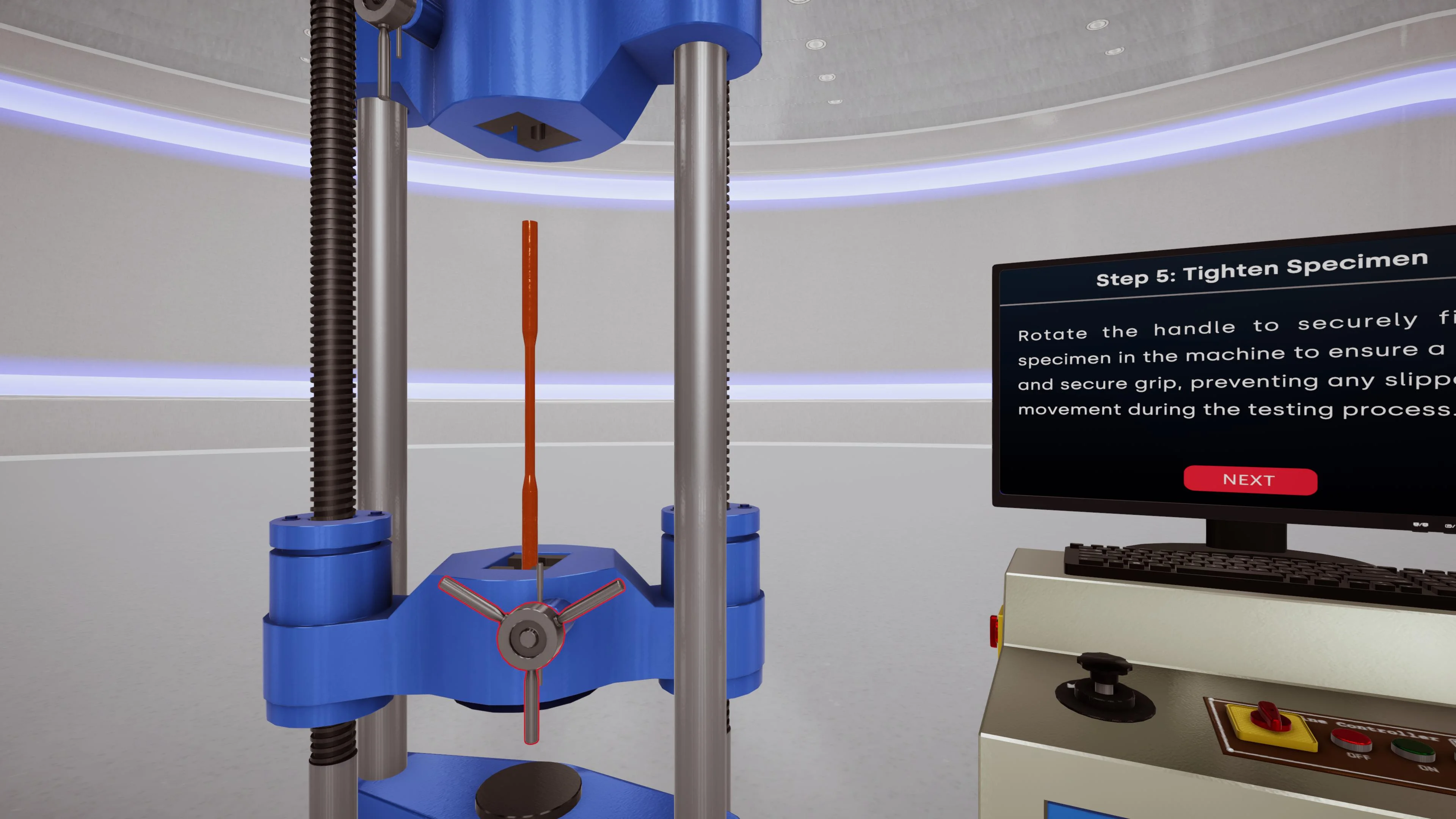
Repeatable, error-tolerant labs. Load specimens to failure, plot stress–strain safely.
High-risk, high-cost scenarios no campus lab can run. Vary load, speed, and ratios.
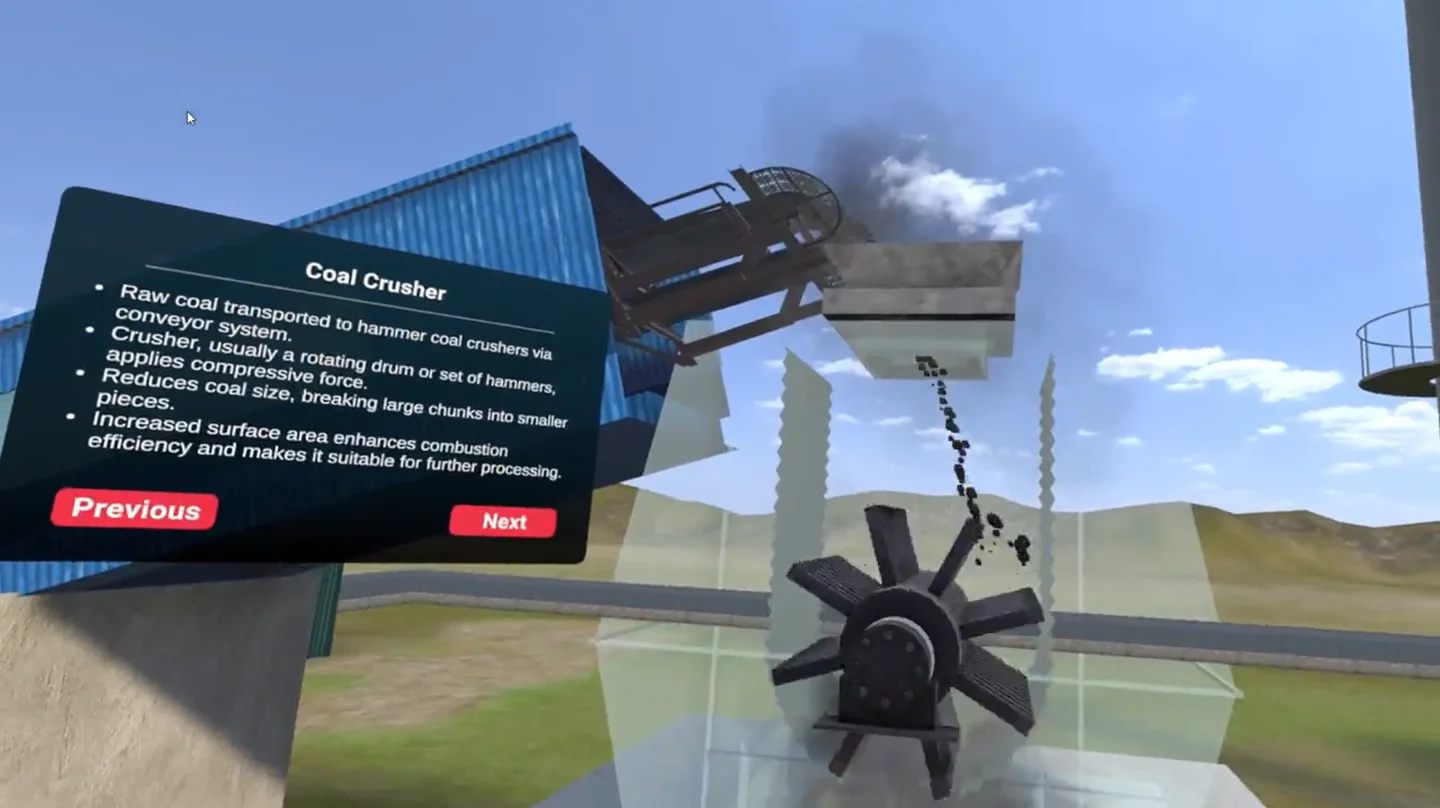
Walk through plants students could never visit. Boilers, turbine halls, cooling towers.
The library
Tear down a full turbofan at life size: compressor, combustor, and turbine.
Disassemble and study the impulse turbine at full scale, bucket by bucket.
Explore internal flow paths and baffles in a full-scale heat exchanger model.
Operate a centre lathe: facing, turning, chamfering, and thread cutting.
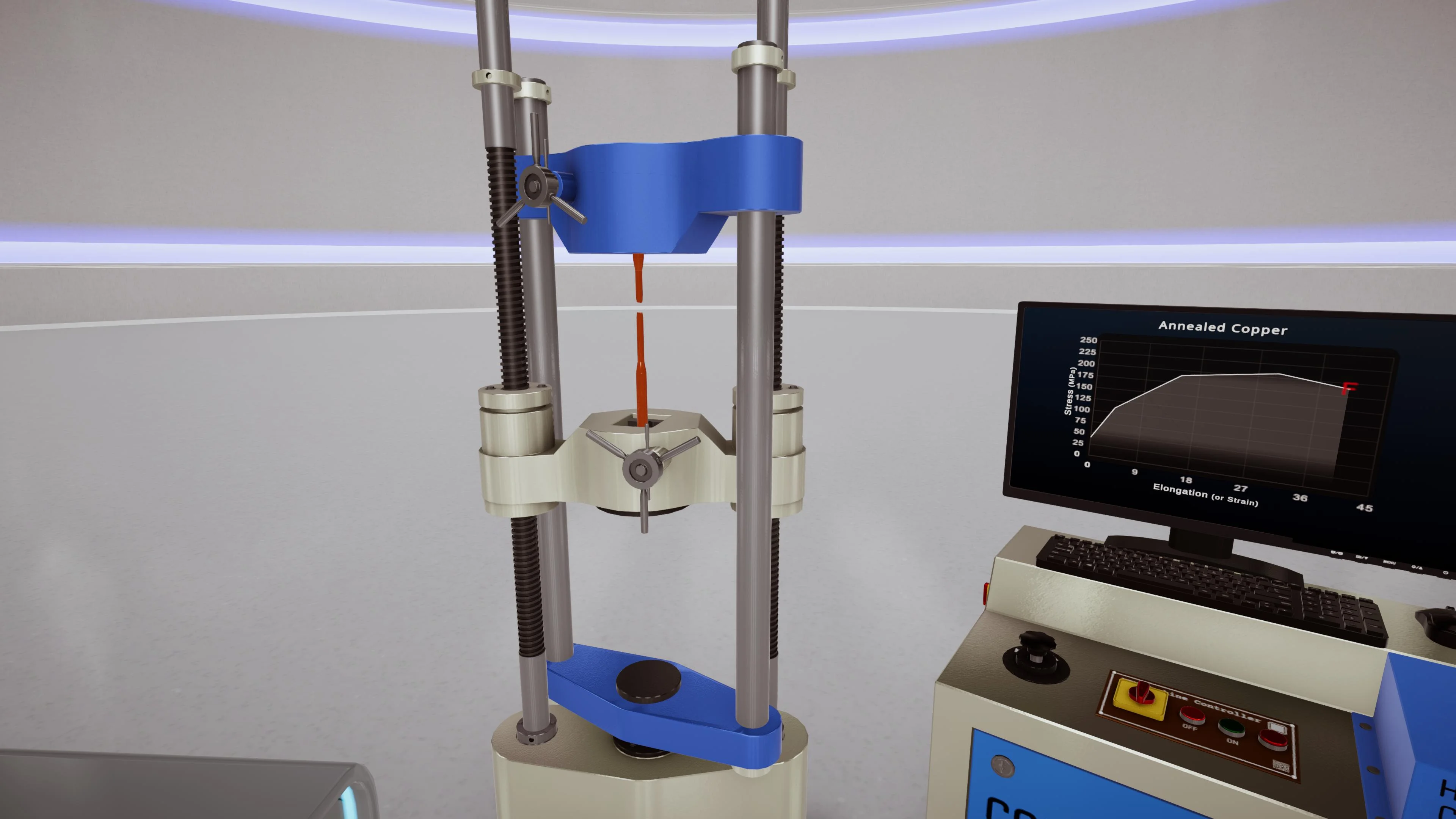
Load specimens to failure and plot the full stress-strain curve interactively.
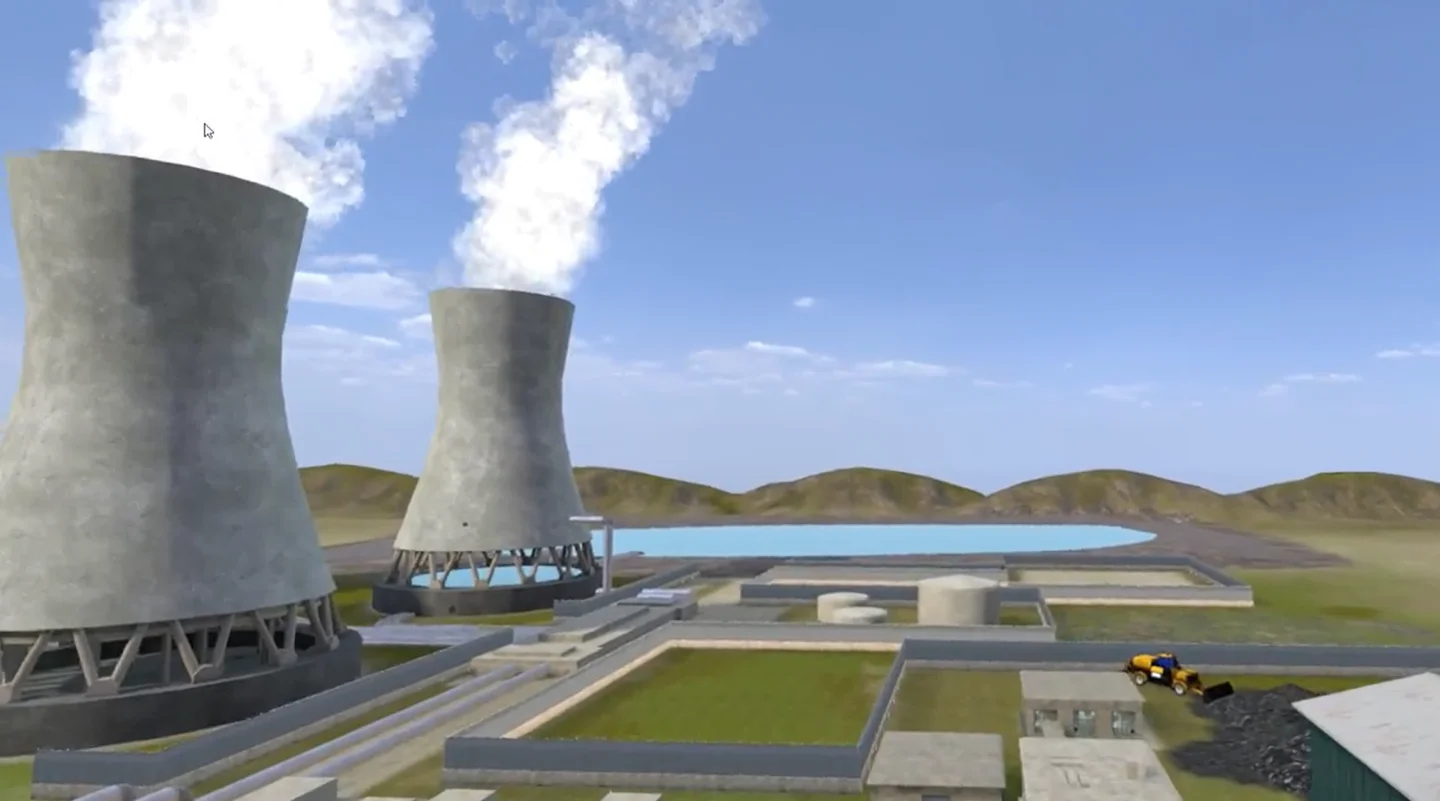
Walk through a complete thermal plant: boiler, turbine hall, cooling towers.
Follow the intake, compression, power, and exhaust strokes in a cutaway engine.
Build and test simple, compound, and epicyclic gear trains under load.
Vary speed and head to observe flow rate, efficiency, and the onset of cavitation.
This is part of the iXRLabs Engineering library - the world's largest VR engineering curriculum. Built on WebXR, with the 7thi AI tutor and faculty analytics in every module.
Standards and syllabi
Every engineering module is mapped to at least one recognised standard or university syllabus. We work with your faculty to ensure alignment before deployment, not after.
Request a syllabus map for your institution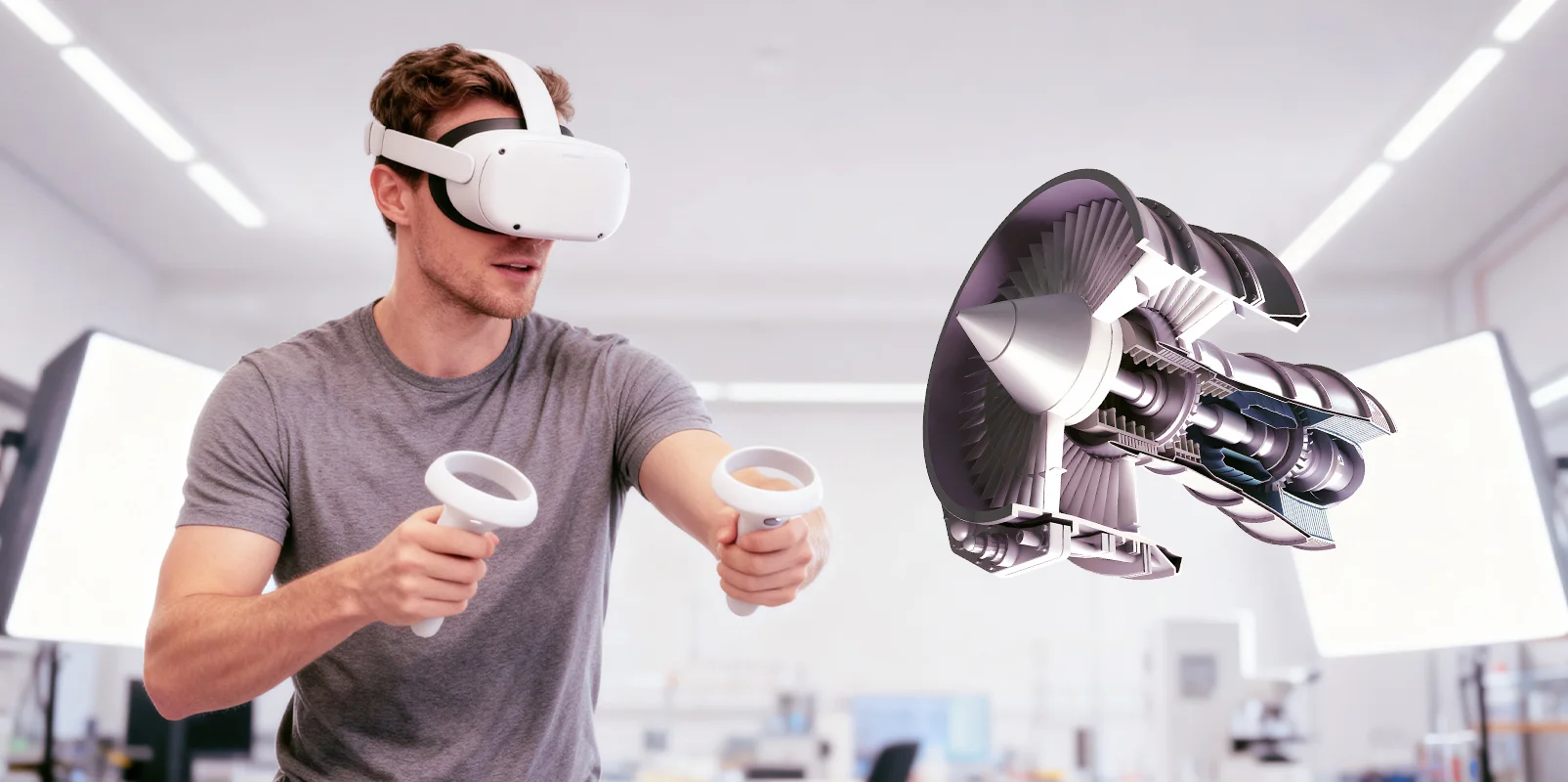
Featured case study · Queen's University Belfast
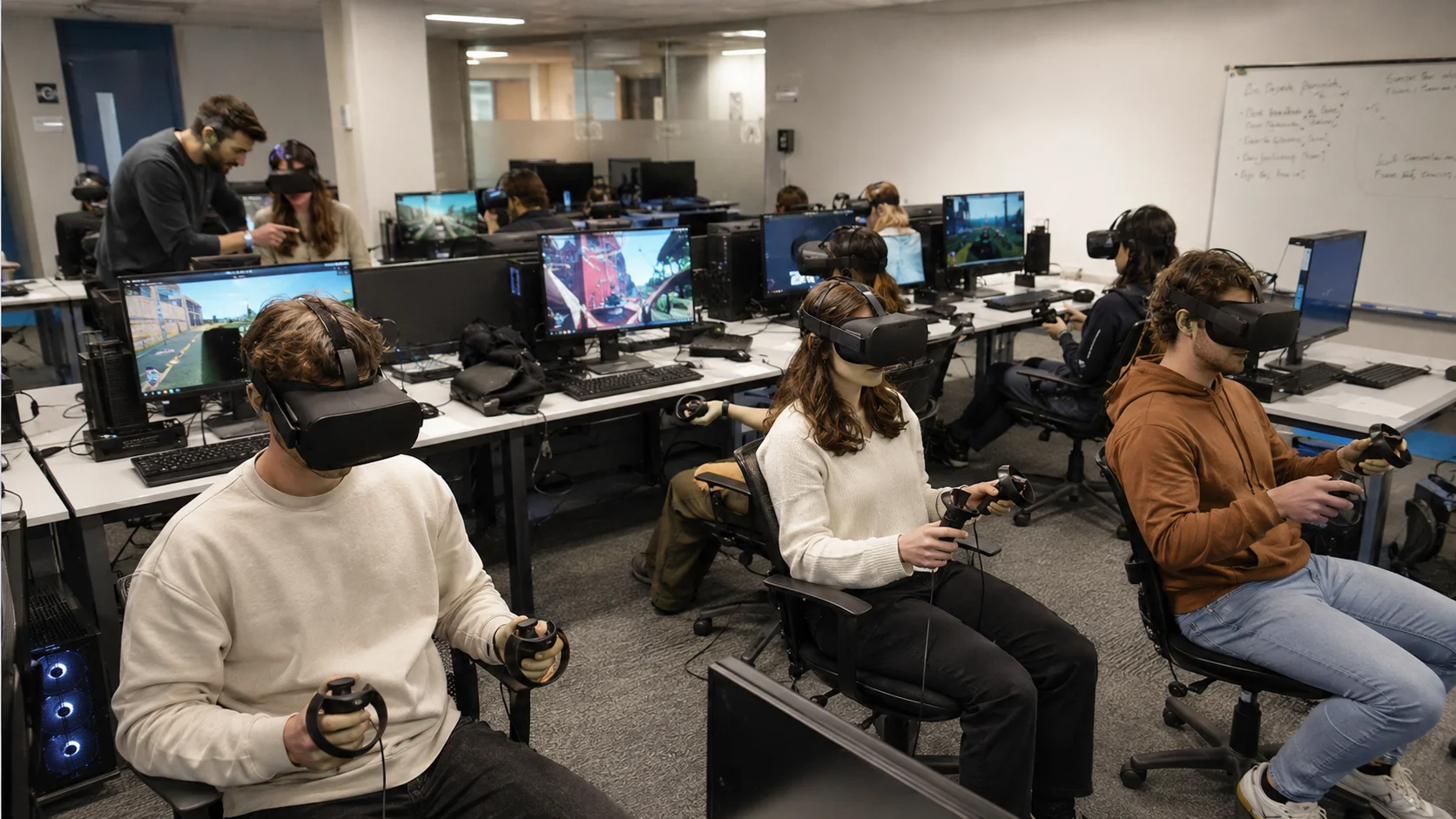
Queen's University Belfast brought immersive engineering modules into its programme, giving students repeatable, hands-on access to equipment and procedures alongside their physical labs.
Starter packages
There's no single fixed bundle — iXRLabs offers a range of engineering packages to match how your department teaches. Choose a stream package (mechanical, electrical, or civil), a focused discipline set, or the complete engineering library. Every package includes the 7thi AI tutor, faculty analytics, deployment support, faculty training, and LMS integration.
Common questions
Have a question we haven’t covered? Our team has helped 40+ institutions evaluate and deploy VR labs.
Talk to us100 modules across thermodynamics, fluid mechanics, machine design, manufacturing, heat transfer, and IC engines. Topics range from stress–strain analysis and gear design to turbine teardowns and full thermal power plant tours. The library grows every quarter, built in collaboration with university faculty.
Yes. Every module is curriculum-mapped before deployment. We support NBA, NAAC, QS, IEAC, Engineering Council UK (AHEP), and ABET, plus individual university syllabi. Our team works with your faculty to verify alignment before students see anything.
No - it complements them. VR gives students safe, repeatable access to equipment and scenarios that are too expensive, too dangerous, or too infrequent to run in a physical lab. Students who practise in VR first arrive at the physical lab better prepared.
A pilot department can be live in two weeks. Full institutional rollout - including LMS integration, faculty training, and syllabus mapping - typically takes 4–8 weeks depending on scale. No special infrastructure is needed: just headsets (or browsers) and a Wi-Fi connection.
Yes. We run structured pilots - typically one department, one semester, a curated set of modules - with full analytics so your institution can evaluate impact before scaling.
New modules release quarterly. Existing modules receive improvements based on analytics data and faculty feedback. All updates arrive automatically through WebXR - no manual action, no downtime.
Tailored to your mechanical engineering departments, your cohort, your curriculum.