
Pedagogy8 min read·2026

Why VR works: the science of learning by doing.

iX
iXRLabs Team
Learning & pedagogy
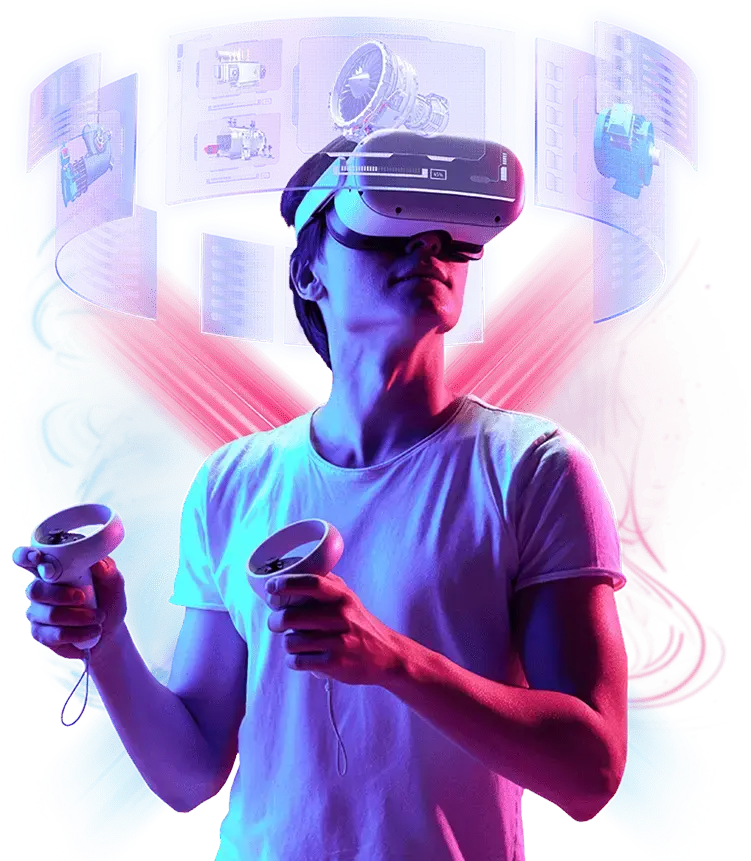
A student actively learning in a VR headset

Ask any educator why hands-on labs matter and you'll hear the same answer: students learn by doing. It's an instinct backed by decades of cognitive science - and it's exactly the instinct that the economics of higher education make so hard to honour at scale. This piece looks at what the research actually says about learning by doing, and why immersive VR is uniquely positioned to deliver it.

The problem with passive learning

Lectures and textbooks are efficient ways to transmit information, but information transmission is not the same as skill acquisition. A student can watch a demonstration of a titration, read about endpoint detection, and still fumble the procedure the first time they hold the burette. The gap between knowing and doing is where most practical education lives - and it's the gap that's hardest to close without equipment, time, and supervision.

In most institutions, those three resources are scarce at exactly the same time. Equipment is expensive and shared. Lab slots are limited. Supervisors can only watch so many students at once. The result is a familiar compromise: students rotate through in groups, and many spend more time observing than operating.

The gap between knowing and doing is where most practical education lives.

What the research says about embodied learning

Cognitive science has a name for the idea that physical action supports understanding: embodied cognition. The broad finding across many studies is that when learners physically perform a task - manipulate objects, make decisions, experience consequences - they encode it more durably than when they merely watch.

Several mechanisms are thought to contribute:

  • Active retrieval. Doing a procedure forces the learner to recall and apply knowledge, which strengthens memory more than passive review.
  • Spatial and motor encoding. Physical interaction adds spatial and motor memory traces that pure reading does not.
  • Immediate feedback. Acting and seeing the result closes the loop between decision and consequence quickly, which accelerates learning.

(Specific studies and citations to be added by the iXRLabs content team before publishing.)

Why VR is uniquely suited to this

Immersive VR reproduces the parts of hands-on learning that matter most - agency, spatial presence, and consequence - without the parts that make it expensive to scale. A student in a well-designed VR module isn't watching a procedure; they're performing it, with their own hands, at their own pace, as many times as they need.

Crucially, VR removes the scarcity. There's no single piece of equipment to queue for. There's no breakage to fear, no consumable to ration, no safety risk to supervise around. Every student in a cohort can run the full procedure simultaneously, and repeat it until they're confident.

Safe failure as a feature

Because nothing physical is at stake, students can do the most valuable thing a learner can do: get it wrong on purpose. They can push a parameter past its limit, mis-sequence a reassembly, or misjudge a clinical decision - and watch what happens. Failure becomes a source of insight rather than a cost to be avoided.

Where AI tutoring fits

Hands-on practice is powerful, but it's most powerful when paired with timely guidance. That's the role of a curriculum-aware AI tutor like 7thi: it watches what the student is doing inside the simulation, prompts hypotheses, answers questions in context, and adapts to each learner's level. It's the supervisor who can be everywhere at once - without replacing the human faculty who set the goals and interpret the results.

The takeaway for higher education

VR doesn't replace physical labs, cadavers, or real equipment. It augments them - closing the knowing–doing gap at a scale that physical resources alone can't reach. For institutions trying to give every student genuine practice, that's not a nice-to-have. It's the whole point.

See learning-by-doing in action.

Book a 30-minute demo and watch students run real procedures in VR.

Book a demo

Curious how this works in your subject?

Book a demo tailored to your discipline and cohort.

iXRLabs
Pedagogy8 min read·2026

Why VR works: the science of learning by doing.

iX
iXRLabs Team
Learning & pedagogy
A student actively learning in a VR headset

Ask any educator why hands-on labs matter and you'll hear the same answer: students learn by doing. It's an instinct backed by decades of cognitive science - and it's exactly the instinct that the economics of higher education make so hard to honour at scale. This piece looks at what the research actually says about learning by doing, and why immersive VR is uniquely positioned to deliver it.

The problem with passive learning

Lectures and textbooks are efficient ways to transmit information, but information transmission is not the same as skill acquisition. A student can watch a demonstration of a titration, read about endpoint detection, and still fumble the procedure the first time they hold the burette. The gap between knowing and doing is where most practical education lives - and it's the gap that's hardest to close without equipment, time, and supervision.

In most institutions, those three resources are scarce at exactly the same time. Equipment is expensive and shared. Lab slots are limited. Supervisors can only watch so many students at once. The result is a familiar compromise: students rotate through in groups, and many spend more time observing than operating.

The gap between knowing and doing is where most practical education lives.

What the research says about embodied learning

Cognitive science has a name for the idea that physical action supports understanding: embodied cognition. The broad finding across many studies is that when learners physically perform a task - manipulate objects, make decisions, experience consequences - they encode it more durably than when they merely watch.

Several mechanisms are thought to contribute:

  • Active retrieval. Doing a procedure forces the learner to recall and apply knowledge, which strengthens memory more than passive review.
  • Spatial and motor encoding. Physical interaction adds spatial and motor memory traces that pure reading does not.
  • Immediate feedback. Acting and seeing the result closes the loop between decision and consequence quickly, which accelerates learning.

(Specific studies and citations to be added by the iXRLabs content team before publishing.)

Why VR is uniquely suited to this

Immersive VR reproduces the parts of hands-on learning that matter most - agency, spatial presence, and consequence - without the parts that make it expensive to scale. A student in a well-designed VR module isn't watching a procedure; they're performing it, with their own hands, at their own pace, as many times as they need.

Crucially, VR removes the scarcity. There's no single piece of equipment to queue for. There's no breakage to fear, no consumable to ration, no safety risk to supervise around. Every student in a cohort can run the full procedure simultaneously, and repeat it until they're confident.

Safe failure as a feature

Because nothing physical is at stake, students can do the most valuable thing a learner can do: get it wrong on purpose. They can push a parameter past its limit, mis-sequence a reassembly, or misjudge a clinical decision - and watch what happens. Failure becomes a source of insight rather than a cost to be avoided.

Where AI tutoring fits

Hands-on practice is powerful, but it's most powerful when paired with timely guidance. That's the role of a curriculum-aware AI tutor like 7thi: it watches what the student is doing inside the simulation, prompts hypotheses, answers questions in context, and adapts to each learner's level. It's the supervisor who can be everywhere at once - without replacing the human faculty who set the goals and interpret the results.

The takeaway for higher education

VR doesn't replace physical labs, cadavers, or real equipment. It augments them - closing the knowing–doing gap at a scale that physical resources alone can't reach. For institutions trying to give every student genuine practice, that's not a nice-to-have. It's the whole point.

See learning-by-doing in action.

Book a 30-minute demo and watch students run real procedures in VR.

Book a demo

Curious how this works in your subject?

Book a demo tailored to your discipline and cohort.